
Revitalizing Downtowns with Live/Work/Play Communities
Urban downtowns have been seen as the center of city life. Recently, however, this system has been going through some growing pains.

Urban downtowns have been seen as the center of city life. Recently, however, this system has been going through some growing pains.

Walgreens made news this year when it announced its plans to close 1,200 locations over the next three years (per CNN), an exclamation point on the ongoing struggles of the retail drugstore industry…This begs the question: is the modern drugstore still relevant?
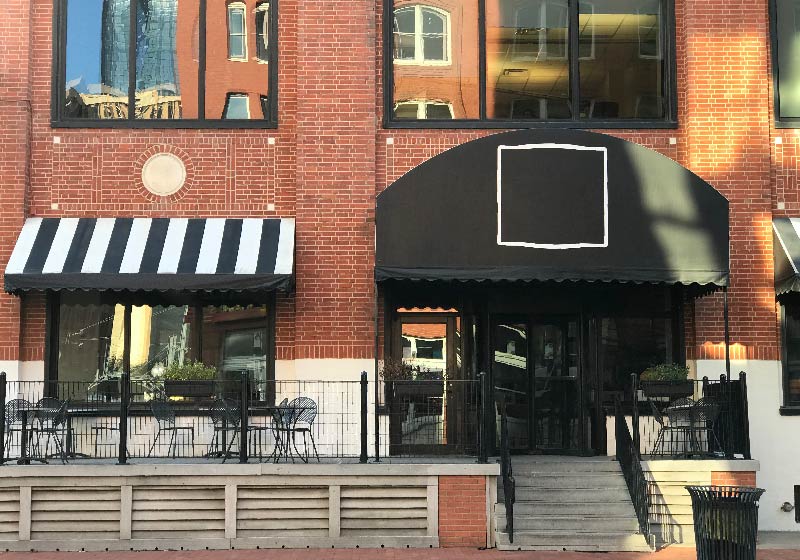
Despite the glut of online-only shoppers, businesses still need a strong, inviting storefront. If your storefront needs a little attention, here are some thoughts on how to start your revamp.

Over the past hundred years or so, human life has changed radically. From the farms to the city, from simple dugout homes in the prairies to towering high-rise skyscrapers in bustling downtowns, there are many aspects of the modern world that would leave the architects and engineers of yesteryear amazed. Still, that hasn’t stopped many from imagining what our future cities might look like, not to mention guessing at how we might solve the problems we face today. According to the President and Designated Expert of the Council on Tall Buildings and Urban Habitat (CTBUH), one feature that may grow in prominence within cities around the world is the skybridge. In the CTBUH Journal, Wood writes: “For more than a century, architects and urban visionaries have foretold of three-dimensional cities, with tall buildings linked by skybridges forming a new kind of urban fabric. Rapid urbanization and new technological advances have converged to reignite the potential of such constructions at the urban scale.” Antony Wood’s 2020 comments carried an excited vision for skybridges moving into the future, but have these predictions become a reality, or are we still waiting to see their full potential? What is a Skybridge?For the uninitiated, skybridges

Across commercial real estate sectors, various amenities rise and fall in prominence each year as investors track what attracts top-tier tenants and drives business. In the face of increasing urbanization where city center locations are in high demand, one property trait that’s been steadily gaining attention is walkability. But what does it look like when a property has good walkability, and is there anything that owners and investors can do to improve this feature? Let’s delve deeper into this subject to provide some clarity. What is Walkability?Walkability is an overarching term referring to a property’s proximity to other businesses that serve its tenants and visitors, and to the number and quality of pedestrian-friendly characteristics present. For apartment buildings, this might include benches or bike racks around the exterior, and parks or grocery stores nearby. For office buildings, a coffee shop opening on the ground floor could be a prime example. The benefits of investing in walkability are numerous. It reinforces healthy habits, has positive environmental effects, and revitalizes communities. However, the real reason why walkability is becoming a bigger focus today is the trackable evidence it has on investors’ pocketbooks. How Does it Impact Commercial Real Estate (CRE)?The importance of
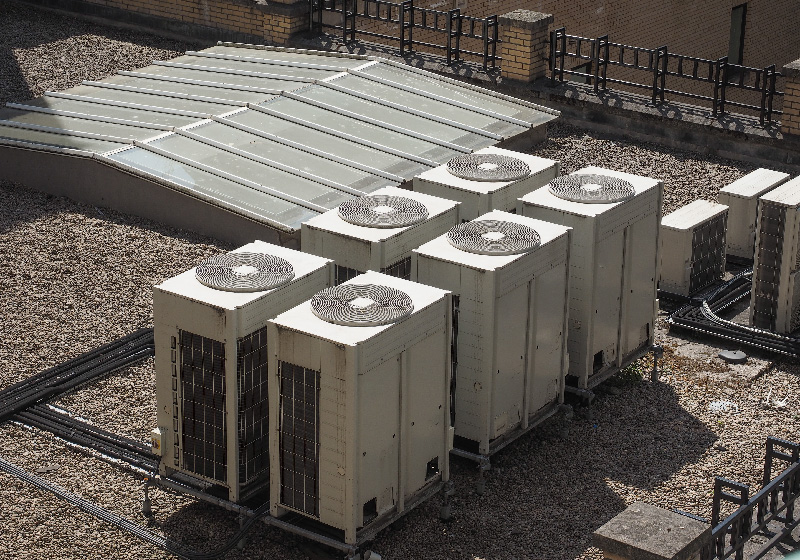
Maintaining a commercial property involves overseeing various complex systems, but none are perhaps as crucial for occupant comfort and health as a well-functioning HVAC system. For property managers or owners unfamiliar with the intricacies of commercial HVAC, this guide provides essential information and helpful tips. Understanding Commercial vs. Residential HVACHomeowners accustomed to their residential HVAC unit might underestimate the power needed to cool a commercial space. While several factors differentiate residential and commercial units, size is the most striking. Due to larger areas, commercial properties often require units up to ten times heavier than residential ones. These units use more powerful components and often work in tandem to handle the demands of large buildings. Unlike residential systems, which often utilize “packaged” all-in-one units for both heating and cooling, commercial systems typically divide these functions among various units. These units, usually located on rooftops for noise reduction and space optimization, generally fall into three categories: Common Issues and PreventionCommercial HVAC systems, regardless of the type, are generally larger and more powerful than their residential counterparts. Here are some common issues and their causes to facilitate early detection: By understanding the unique needs of commercial HVAC systems and implementing preventive measures, property

On October 1st, the student loan pause that stretched back to early 2020 will come to its climactic end, leaving many economic analysts as well as borrowers anxious about the future. An extra few hundred dollars of costs affecting the budgets of roughly 44 million Americans is sure to send ripples throughout many industries. And for commercial property investors, staying up to date on the latest speculation tends to have its value. Looking forward, here’s how the end to The Pause might impact a few key real estate sectors. Forecasting the Effect on Multi-Family PropertiesAs we’ve discussed, property owners are getting creative with ways to add to multi-family property inventory as other sectors have been negatively impacted by inflation. While it’s true that most still consider multi-family properties a smart add to any investor’s portfolio, recent conversion strategies and new builds have prioritized higher-end units, which doesn’t balance well with student loan payment continuation. Those impacted by student loans are likely to look for ways to save, which may mean downgrading their living situations by moving from Class-A locations to Class-B, or from Class-B to Class-C. Millennials and younger renters who have opted to rent alone may also choose to

Comfort and familiarity are things that people cling onto for comfort. While most are willing to venture out to a new restaurant or clothing store from time to time to “mix it up,” wider lifestyle changes are generally met with major push-back. In the realm of real estate, this fact is perhaps the most clear in instances of new construction near residential communities. Often, residents of existing communities fight to preserve the familiar feel of their neighborhoods through protesting affordable housing developments, new high-rises, or any unwanted businesses. These conflicts are natural issues for developers and property investment groups, and while these residents may not realize it immediately, derailing growth often comes back to harm their communities beyond what they expected. Change can be tough, but many cities formerly resistant to developments (notably wealthy enclaves) are starting to shift their views to their benefit. What is NIMBY?NIMBY, also sometimes known as nimbyism, is a term used in reference to groups in a community that fight in an organized manner against new developments that threaten their way of life in some manner. Standing for “Not In My Back Yard,” NIMBY started mostly to defend against environmental and public contamination in the
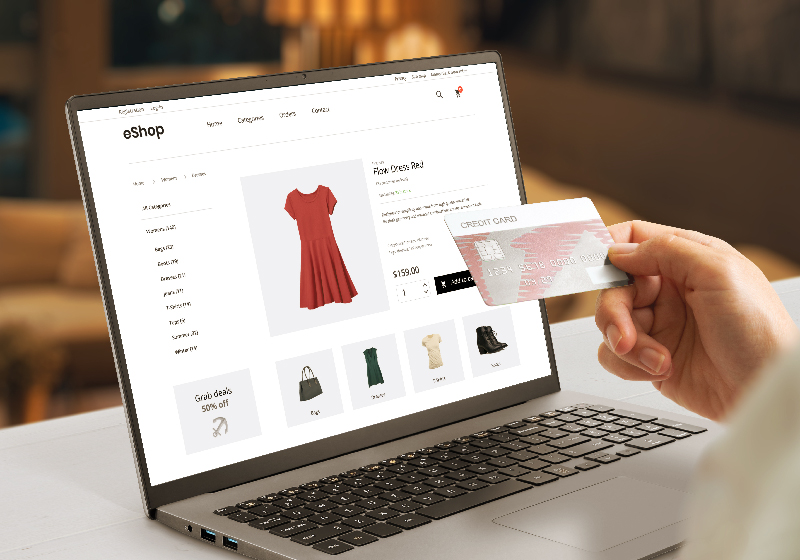
Technology has a habit of drastically altering our lives. Do you recall the way you spent your idle time five years ago? A decade ago? Twenty years? Between the rise of streaming, the prevalence of social media, electric vehicles, and the era of artificial intelligence, some technologies are so commonplace that it is hard to imagine life without them, while other innovations make projecting industry trends a tall order. Making smart moves in any industry means staying on top of these innovative technologies and tracking trends. For the commercial real estate industry, one form of doing business that’s undoubtedly been sending ripple effects throughout the industry is E-commerce. What is E-Commerce, and How Has it Changed?E-commerce is an abbreviated term meaning “electronic commerce,” and refers to the rising industry of online shopping, where consumers can purchase from their favorite brands, select a delivery location of their choice, and even offer direct feedback on their experience all without leaving their desktop. Today, businesses are practically required to use an online store in order to see success, and some businesses have been able to operate entirely as an online entity – without any physical presence whatsoever. Due to the incredible ease of

It’s official. For the third year in a row, the fastest growing sport in the United States is pickleball (according to enthusiasts of the sport at Pickleheads). Odds are good that you’ve already heard of the trend, had a friend fall victim to its not-quite tennis, not-quite ping pong charm, or maybe you’ve been bitten by the pickleball bug yourself. Despite plenty of skepticism, this fad has refused to die down, and commercial real estate investors are starting to take notice. But why pickleball, and what sort of impact can this casual recreational activity have on the CRE landscape? Today, let’s take a swing at de-mystifying the surprising impact of pickleball. What is Pickleball, Anyway?For those who are more than an arm’s length away from the game, pickleball may just seem like a game with a funny name that’s too similar to a number of other more well-established sports. Are there really enough things that make pickleball unique enough to have a draw all on its own? Well, based on its sustained growth, signs seem to indicate that it does. Pickleball is a sport that can be played competitively with two individuals facing off, or in the form of doubles,
Urban downtowns have been seen as the center of city life. Recently, however, this system has been going through some growing pains.
Walgreens made news this year when it announced its plans to close 1,200 locations over the next three years (per CNN), an exclamation point on the ongoing struggles of the retail drugstore industry…This begs the question: is the modern drugstore still relevant?
Despite the glut of online-only shoppers, businesses still need a strong, inviting storefront. If your storefront needs a little attention, here are some thoughts on how to start your revamp.
Over the past hundred years or so, human life has changed radically. From the farms to the city, from simple dugout homes in the prairies to towering high-rise skyscrapers in bustling downtowns, there are many aspects of the modern world that would leave the architects and engineers of yesteryear amazed. Still, that hasn’t stopped many from imagining what our future cities might look like, not to mention guessing at how we might solve the problems we face today. According to the President and Designated Expert of the Council on Tall Buildings and Urban Habitat (CTBUH), one feature that may grow in prominence within cities around the world is the skybridge. In the CTBUH Journal, Wood writes: “For more than a century, architects and urban visionaries have foretold of three-dimensional cities, with tall buildings linked by skybridges forming a new kind of urban fabric. Rapid urbanization and new technological advances have converged to reignite the potential of such constructions at the urban scale.” Antony Wood’s 2020 comments carried an excited vision for skybridges moving into the future, but have these predictions become a reality, or are we still waiting to see their full potential? What is a Skybridge?For the uninitiated, skybridges
Across commercial real estate sectors, various amenities rise and fall in prominence each year as investors track what attracts top-tier tenants and drives business. In the face of increasing urbanization where city center locations are in high demand, one property trait that’s been steadily gaining attention is walkability. But what does it look like when a property has good walkability, and is there anything that owners and investors can do to improve this feature? Let’s delve deeper into this subject to provide some clarity. What is Walkability?Walkability is an overarching term referring to a property’s proximity to other businesses that serve its tenants and visitors, and to the number and quality of pedestrian-friendly characteristics present. For apartment buildings, this might include benches or bike racks around the exterior, and parks or grocery stores nearby. For office buildings, a coffee shop opening on the ground floor could be a prime example. The benefits of investing in walkability are numerous. It reinforces healthy habits, has positive environmental effects, and revitalizes communities. However, the real reason why walkability is becoming a bigger focus today is the trackable evidence it has on investors’ pocketbooks. How Does it Impact Commercial Real Estate (CRE)?The importance of
Maintaining a commercial property involves overseeing various complex systems, but none are perhaps as crucial for occupant comfort and health as a well-functioning HVAC system. For property managers or owners unfamiliar with the intricacies of commercial HVAC, this guide provides essential information and helpful tips. Understanding Commercial vs. Residential HVACHomeowners accustomed to their residential HVAC unit might underestimate the power needed to cool a commercial space. While several factors differentiate residential and commercial units, size is the most striking. Due to larger areas, commercial properties often require units up to ten times heavier than residential ones. These units use more powerful components and often work in tandem to handle the demands of large buildings. Unlike residential systems, which often utilize “packaged” all-in-one units for both heating and cooling, commercial systems typically divide these functions among various units. These units, usually located on rooftops for noise reduction and space optimization, generally fall into three categories: Common Issues and PreventionCommercial HVAC systems, regardless of the type, are generally larger and more powerful than their residential counterparts. Here are some common issues and their causes to facilitate early detection: By understanding the unique needs of commercial HVAC systems and implementing preventive measures, property
On October 1st, the student loan pause that stretched back to early 2020 will come to its climactic end, leaving many economic analysts as well as borrowers anxious about the future. An extra few hundred dollars of costs affecting the budgets of roughly 44 million Americans is sure to send ripples throughout many industries. And for commercial property investors, staying up to date on the latest speculation tends to have its value. Looking forward, here’s how the end to The Pause might impact a few key real estate sectors. Forecasting the Effect on Multi-Family PropertiesAs we’ve discussed, property owners are getting creative with ways to add to multi-family property inventory as other sectors have been negatively impacted by inflation. While it’s true that most still consider multi-family properties a smart add to any investor’s portfolio, recent conversion strategies and new builds have prioritized higher-end units, which doesn’t balance well with student loan payment continuation. Those impacted by student loans are likely to look for ways to save, which may mean downgrading their living situations by moving from Class-A locations to Class-B, or from Class-B to Class-C. Millennials and younger renters who have opted to rent alone may also choose to
Comfort and familiarity are things that people cling onto for comfort. While most are willing to venture out to a new restaurant or clothing store from time to time to “mix it up,” wider lifestyle changes are generally met with major push-back. In the realm of real estate, this fact is perhaps the most clear in instances of new construction near residential communities. Often, residents of existing communities fight to preserve the familiar feel of their neighborhoods through protesting affordable housing developments, new high-rises, or any unwanted businesses. These conflicts are natural issues for developers and property investment groups, and while these residents may not realize it immediately, derailing growth often comes back to harm their communities beyond what they expected. Change can be tough, but many cities formerly resistant to developments (notably wealthy enclaves) are starting to shift their views to their benefit. What is NIMBY?NIMBY, also sometimes known as nimbyism, is a term used in reference to groups in a community that fight in an organized manner against new developments that threaten their way of life in some manner. Standing for “Not In My Back Yard,” NIMBY started mostly to defend against environmental and public contamination in the
Technology has a habit of drastically altering our lives. Do you recall the way you spent your idle time five years ago? A decade ago? Twenty years? Between the rise of streaming, the prevalence of social media, electric vehicles, and the era of artificial intelligence, some technologies are so commonplace that it is hard to imagine life without them, while other innovations make projecting industry trends a tall order. Making smart moves in any industry means staying on top of these innovative technologies and tracking trends. For the commercial real estate industry, one form of doing business that’s undoubtedly been sending ripple effects throughout the industry is E-commerce. What is E-Commerce, and How Has it Changed?E-commerce is an abbreviated term meaning “electronic commerce,” and refers to the rising industry of online shopping, where consumers can purchase from their favorite brands, select a delivery location of their choice, and even offer direct feedback on their experience all without leaving their desktop. Today, businesses are practically required to use an online store in order to see success, and some businesses have been able to operate entirely as an online entity – without any physical presence whatsoever. Due to the incredible ease of
It’s official. For the third year in a row, the fastest growing sport in the United States is pickleball (according to enthusiasts of the sport at Pickleheads). Odds are good that you’ve already heard of the trend, had a friend fall victim to its not-quite tennis, not-quite ping pong charm, or maybe you’ve been bitten by the pickleball bug yourself. Despite plenty of skepticism, this fad has refused to die down, and commercial real estate investors are starting to take notice. But why pickleball, and what sort of impact can this casual recreational activity have on the CRE landscape? Today, let’s take a swing at de-mystifying the surprising impact of pickleball. What is Pickleball, Anyway?For those who are more than an arm’s length away from the game, pickleball may just seem like a game with a funny name that’s too similar to a number of other more well-established sports. Are there really enough things that make pickleball unique enough to have a draw all on its own? Well, based on its sustained growth, signs seem to indicate that it does. Pickleball is a sport that can be played competitively with two individuals facing off, or in the form of doubles,