
Revitalizing Downtowns with Live/Work/Play Communities
Urban downtowns have been seen as the center of city life. Recently, however, this system has been going through some growing pains.

Urban downtowns have been seen as the center of city life. Recently, however, this system has been going through some growing pains.

To get ready for RTO mandates, here are a few maintenance tasks and upgrades to implement today.

Many people do wild things to accommodate their pets at home, but in recent years, office workers have been asking for this leeway to expand into the workplace as well.
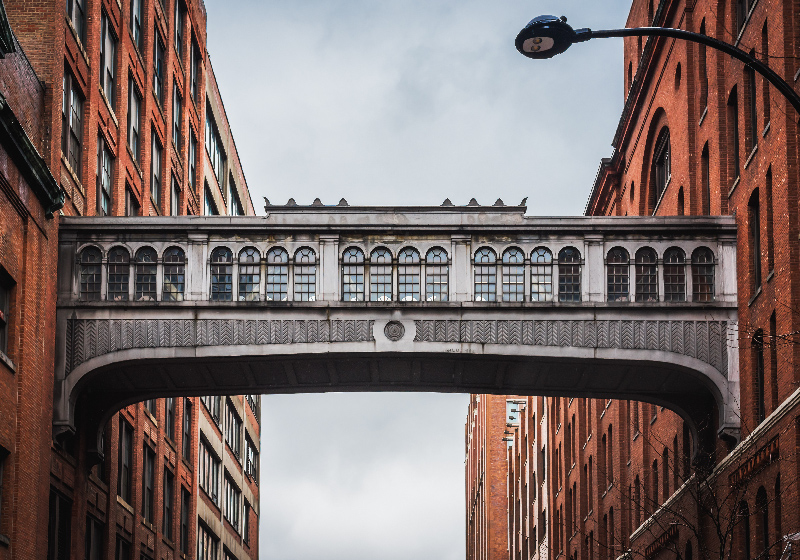
Over the past hundred years or so, human life has changed radically. From the farms to the city, from simple dugout homes in the prairies to towering high-rise skyscrapers in bustling downtowns, there are many aspects of the modern world that would leave the architects and engineers of yesteryear amazed. Still, that hasn’t stopped many from imagining what our future cities might look like, not to mention guessing at how we might solve the problems we face today. According to the President and Designated Expert of the Council on Tall Buildings and Urban Habitat (CTBUH), one feature that may grow in prominence within cities around the world is the skybridge. In the CTBUH Journal, Wood writes: “For more than a century, architects and urban visionaries have foretold of three-dimensional cities, with tall buildings linked by skybridges forming a new kind of urban fabric. Rapid urbanization and new technological advances have converged to reignite the potential of such constructions at the urban scale.” Antony Wood’s 2020 comments carried an excited vision for skybridges moving into the future, but have these predictions become a reality, or are we still waiting to see their full potential? What is a Skybridge?For the uninitiated, skybridges

Artificial intelligence (AI) has been a hot-button topic of discussion, in not only educational settings, but the workplace. Business owners and investors want to stay ahead of the curve, and employees fear becoming redundant, but to make a long story short, no one knows fully what to expect with AI. For those who are using AI in their businesses already, early tools are being lauded as time-savers, improving productivity in many different areas and limiting time spent on mundane tasks. According to Forbes, the AI market size is on track to reach $407 billion by 2027 (from $86.9 billion in 2022), which means that all industries are going to have to learn to adapt. With a new industry that’s growing so quickly, AI is going to demand its own space to expand physically. To answer this growing demand, here’s how the CRE space will answer. Answering AI’s Growing Space DemandArtificial intelligence tools need developers and specialists working in those fields, which makes tech centers particularly reactive to industry growth. Areas like the San Francisco Bay area, Boston, Seattle, and New York will need to provide adequate working options for tech employees. In the past, this meant that investors could expect
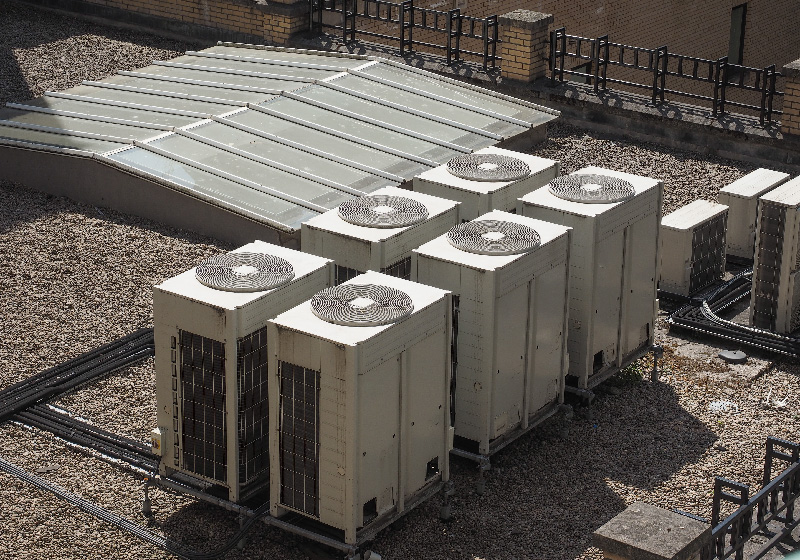
Maintaining a commercial property involves overseeing various complex systems, but none are perhaps as crucial for occupant comfort and health as a well-functioning HVAC system. For property managers or owners unfamiliar with the intricacies of commercial HVAC, this guide provides essential information and helpful tips. Understanding Commercial vs. Residential HVACHomeowners accustomed to their residential HVAC unit might underestimate the power needed to cool a commercial space. While several factors differentiate residential and commercial units, size is the most striking. Due to larger areas, commercial properties often require units up to ten times heavier than residential ones. These units use more powerful components and often work in tandem to handle the demands of large buildings. Unlike residential systems, which often utilize “packaged” all-in-one units for both heating and cooling, commercial systems typically divide these functions among various units. These units, usually located on rooftops for noise reduction and space optimization, generally fall into three categories: Common Issues and PreventionCommercial HVAC systems, regardless of the type, are generally larger and more powerful than their residential counterparts. Here are some common issues and their causes to facilitate early detection: By understanding the unique needs of commercial HVAC systems and implementing preventive measures, property

Running a successful business takes a lot of time and effort, and often involves optimizing as much as possible in order to maximize that bottom line. Because of this, many business owners and building managers, unfortunately, keep sanitation in house for far longer than they probably should. The truth is that commercial cleaning services can actually improve productivity for businesses and end up paying for themselves in the long run! If you’re thinking it might be time to pull the trigger and hire out for your property’s cleaning, here are some points to keep in mind. How to Know You’re ReadyMost businesses aren’t operating in filth or disrepair, but that doesn’t mean that most businesses won’t greatly benefit from hiring a cleaning service partner. People tend to make due with the conditions that they are in and shift around their daily tasks to do what’s needed to keep their property presentable while still doing their own job. The problem is that employees and tenants who are already stretched thin accomplishing tasks that they were actually hired to do aren’t likely using their time well by cleaning their workspaces. Quality commercial cleaning services know how to do their jobs in a

They’ve been popping up more and more in downtowns everywhere, and it’s no surprise. Mixed-use properties, or properties that incorporate more than one asset type – often with both residential housing units and commercial units – seem to be one route investors are turning to for answers to an inconsistent and unpredictable real estate market. Mixed-use properties not only provide those traditional benefits of allowing a more diverse market of renters and a more reliable portfolio staple, but many are coming to recognize the unique draw mixed-use properties can have for tenants. The Benefits of Mixed-Use PropertiesWith a larger barrier-to-entry for first-time homeowners today (see some of the latest research from experts over at Nerd Wallet), more people are opting to rent for longer. For renters who are used to living in more urbanized areas, mixed-use properties are becoming a natural draw. Buildings that include residential units and businesses like gyms, coffee shops, or grocery stores are extremely attractive to renters for a more convenient lifestyle. They also cut down on emissions for a greener, eco-conscious lifestyle. From a commercial tenant’s perspective, location and access to potential customers is always a major draw. One’s imagination can quickly go wild when
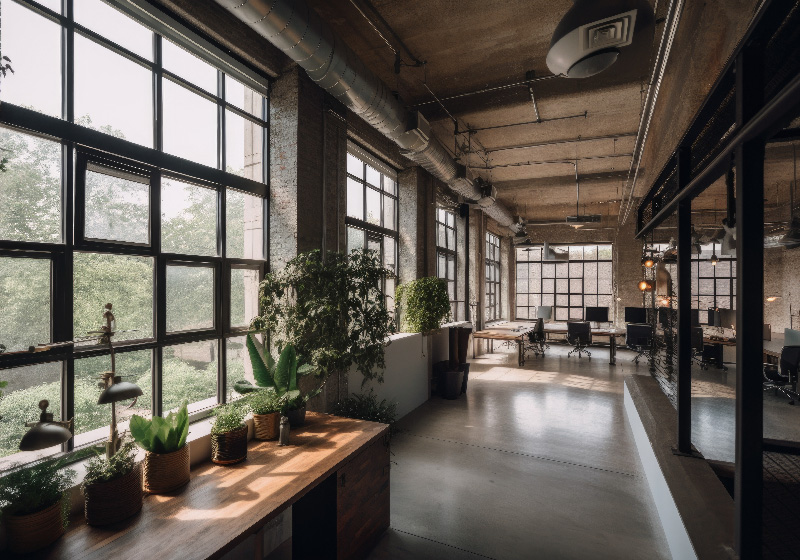
Adaptive reuse is on the rise in commercial real estate as somewhat radical shifts continue to reverberate throughout various CRE subsectors. With the mercurial nature of office and retail space utilization, finding creative ways to repurpose properties without starting from scratch is certainly in the air. This is where “adaptive reuse” comes into play. Do you own a warehouse that’s become an underused capital sink? Restore and renovate the property so that you can reopen it as trendy luxury apartments! Defunct businesses like switchboard operator buildings sitting empty? Rather than tearing it down, reopen it as a unique coffee shop or restaurant. Adaptive reuse is all about creativity and innovation while preserving the interesting historic buildings that can bring a neighborhood or a city its unique character. There are many ways for CRE investors to utilize an adaptive reuse mindset in today’s volatile market, and the benefits of this strategy just might have a considerable impact on their ROI. Common Applications for Adaptive Reuse TodayThe first form of adaptive reuse that we’re seeing pop up over and over recently is the multi-family conversion. Office buildings have continued to struggle filling up post-pandemic, and features like high ceilings, which are somewhat

It’s no secret that the hospitality industry has battled through a tough season in recent years. With economic strain right on the back of lockdowns, hotels have made their long climb back to stability as people slowly became comfortable with traveling again, then looked to make up for lost time. Despite an expected downturn this year, Forbes points toward a recent study where 49% of Americans still plan to travel even more in 2023. Things are looking up in hospitality. Still, hotels are finding that experimenting and innovating are a necessity – and a foothold for future success just might be found in taking advantage of another commercial property sector that’s been rocked by recent CRE shifts. As workers are moving out of the office and into their homes (or anywhere else), the hospitality industry has discovered an opportunity. How Are People Working Today?Companies everywhere have had to adapt quickly in order to operate virtually. Now, changing preferences and demands from workers mean that the traditional full-time, in-office working experience isn’t a reasonable expectation anymore. As office property managers fight for a return to in-person work (along with many company managers and owners), other properties are coming up with flexible
Urban downtowns have been seen as the center of city life. Recently, however, this system has been going through some growing pains.
To get ready for RTO mandates, here are a few maintenance tasks and upgrades to implement today.
Many people do wild things to accommodate their pets at home, but in recent years, office workers have been asking for this leeway to expand into the workplace as well.
Over the past hundred years or so, human life has changed radically. From the farms to the city, from simple dugout homes in the prairies to towering high-rise skyscrapers in bustling downtowns, there are many aspects of the modern world that would leave the architects and engineers of yesteryear amazed. Still, that hasn’t stopped many from imagining what our future cities might look like, not to mention guessing at how we might solve the problems we face today. According to the President and Designated Expert of the Council on Tall Buildings and Urban Habitat (CTBUH), one feature that may grow in prominence within cities around the world is the skybridge. In the CTBUH Journal, Wood writes: “For more than a century, architects and urban visionaries have foretold of three-dimensional cities, with tall buildings linked by skybridges forming a new kind of urban fabric. Rapid urbanization and new technological advances have converged to reignite the potential of such constructions at the urban scale.” Antony Wood’s 2020 comments carried an excited vision for skybridges moving into the future, but have these predictions become a reality, or are we still waiting to see their full potential? What is a Skybridge?For the uninitiated, skybridges
Artificial intelligence (AI) has been a hot-button topic of discussion, in not only educational settings, but the workplace. Business owners and investors want to stay ahead of the curve, and employees fear becoming redundant, but to make a long story short, no one knows fully what to expect with AI. For those who are using AI in their businesses already, early tools are being lauded as time-savers, improving productivity in many different areas and limiting time spent on mundane tasks. According to Forbes, the AI market size is on track to reach $407 billion by 2027 (from $86.9 billion in 2022), which means that all industries are going to have to learn to adapt. With a new industry that’s growing so quickly, AI is going to demand its own space to expand physically. To answer this growing demand, here’s how the CRE space will answer. Answering AI’s Growing Space DemandArtificial intelligence tools need developers and specialists working in those fields, which makes tech centers particularly reactive to industry growth. Areas like the San Francisco Bay area, Boston, Seattle, and New York will need to provide adequate working options for tech employees. In the past, this meant that investors could expect
Maintaining a commercial property involves overseeing various complex systems, but none are perhaps as crucial for occupant comfort and health as a well-functioning HVAC system. For property managers or owners unfamiliar with the intricacies of commercial HVAC, this guide provides essential information and helpful tips. Understanding Commercial vs. Residential HVACHomeowners accustomed to their residential HVAC unit might underestimate the power needed to cool a commercial space. While several factors differentiate residential and commercial units, size is the most striking. Due to larger areas, commercial properties often require units up to ten times heavier than residential ones. These units use more powerful components and often work in tandem to handle the demands of large buildings. Unlike residential systems, which often utilize “packaged” all-in-one units for both heating and cooling, commercial systems typically divide these functions among various units. These units, usually located on rooftops for noise reduction and space optimization, generally fall into three categories: Common Issues and PreventionCommercial HVAC systems, regardless of the type, are generally larger and more powerful than their residential counterparts. Here are some common issues and their causes to facilitate early detection: By understanding the unique needs of commercial HVAC systems and implementing preventive measures, property
Running a successful business takes a lot of time and effort, and often involves optimizing as much as possible in order to maximize that bottom line. Because of this, many business owners and building managers, unfortunately, keep sanitation in house for far longer than they probably should. The truth is that commercial cleaning services can actually improve productivity for businesses and end up paying for themselves in the long run! If you’re thinking it might be time to pull the trigger and hire out for your property’s cleaning, here are some points to keep in mind. How to Know You’re ReadyMost businesses aren’t operating in filth or disrepair, but that doesn’t mean that most businesses won’t greatly benefit from hiring a cleaning service partner. People tend to make due with the conditions that they are in and shift around their daily tasks to do what’s needed to keep their property presentable while still doing their own job. The problem is that employees and tenants who are already stretched thin accomplishing tasks that they were actually hired to do aren’t likely using their time well by cleaning their workspaces. Quality commercial cleaning services know how to do their jobs in a
They’ve been popping up more and more in downtowns everywhere, and it’s no surprise. Mixed-use properties, or properties that incorporate more than one asset type – often with both residential housing units and commercial units – seem to be one route investors are turning to for answers to an inconsistent and unpredictable real estate market. Mixed-use properties not only provide those traditional benefits of allowing a more diverse market of renters and a more reliable portfolio staple, but many are coming to recognize the unique draw mixed-use properties can have for tenants. The Benefits of Mixed-Use PropertiesWith a larger barrier-to-entry for first-time homeowners today (see some of the latest research from experts over at Nerd Wallet), more people are opting to rent for longer. For renters who are used to living in more urbanized areas, mixed-use properties are becoming a natural draw. Buildings that include residential units and businesses like gyms, coffee shops, or grocery stores are extremely attractive to renters for a more convenient lifestyle. They also cut down on emissions for a greener, eco-conscious lifestyle. From a commercial tenant’s perspective, location and access to potential customers is always a major draw. One’s imagination can quickly go wild when
Adaptive reuse is on the rise in commercial real estate as somewhat radical shifts continue to reverberate throughout various CRE subsectors. With the mercurial nature of office and retail space utilization, finding creative ways to repurpose properties without starting from scratch is certainly in the air. This is where “adaptive reuse” comes into play. Do you own a warehouse that’s become an underused capital sink? Restore and renovate the property so that you can reopen it as trendy luxury apartments! Defunct businesses like switchboard operator buildings sitting empty? Rather than tearing it down, reopen it as a unique coffee shop or restaurant. Adaptive reuse is all about creativity and innovation while preserving the interesting historic buildings that can bring a neighborhood or a city its unique character. There are many ways for CRE investors to utilize an adaptive reuse mindset in today’s volatile market, and the benefits of this strategy just might have a considerable impact on their ROI. Common Applications for Adaptive Reuse TodayThe first form of adaptive reuse that we’re seeing pop up over and over recently is the multi-family conversion. Office buildings have continued to struggle filling up post-pandemic, and features like high ceilings, which are somewhat
It’s no secret that the hospitality industry has battled through a tough season in recent years. With economic strain right on the back of lockdowns, hotels have made their long climb back to stability as people slowly became comfortable with traveling again, then looked to make up for lost time. Despite an expected downturn this year, Forbes points toward a recent study where 49% of Americans still plan to travel even more in 2023. Things are looking up in hospitality. Still, hotels are finding that experimenting and innovating are a necessity – and a foothold for future success just might be found in taking advantage of another commercial property sector that’s been rocked by recent CRE shifts. As workers are moving out of the office and into their homes (or anywhere else), the hospitality industry has discovered an opportunity. How Are People Working Today?Companies everywhere have had to adapt quickly in order to operate virtually. Now, changing preferences and demands from workers mean that the traditional full-time, in-office working experience isn’t a reasonable expectation anymore. As office property managers fight for a return to in-person work (along with many company managers and owners), other properties are coming up with flexible