
Revitalizing Downtowns with Live/Work/Play Communities
Urban downtowns have been seen as the center of city life. Recently, however, this system has been going through some growing pains.

Urban downtowns have been seen as the center of city life. Recently, however, this system has been going through some growing pains.
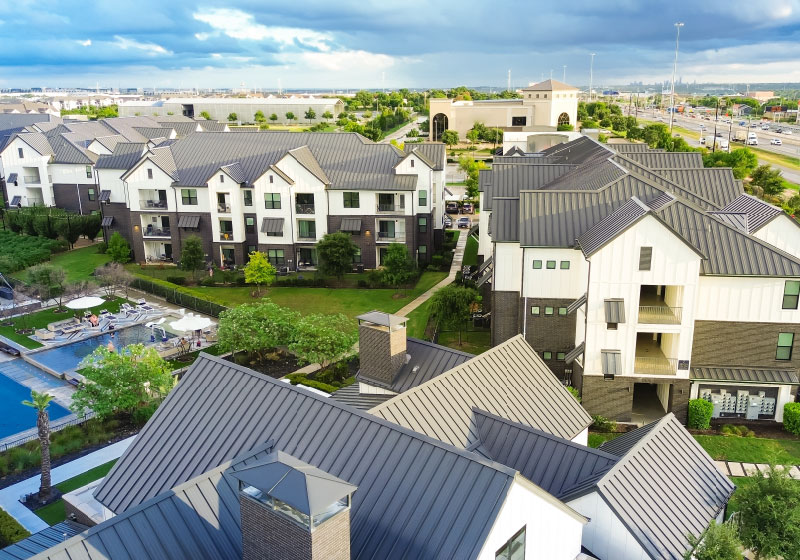
Answering the call for housing everywhere, 2024 was truly the year of multi-family properties, as over 500,000 new units were completed by the end of December. While 2025 may see a slight step back in completions, 2 million new apartments are arriving on the market by 2028.

Commercial properties require frequent inspections for many different reasons. From new acquisitions, to lease renewals, to recurring maintenance checks, commercial inspections are a standard part of every business’ annual expenses. From a property inspector’s perspective, these jobs are great due to the more professional, less emotionally charged approach in comparison to residential inspections. Plus, commercial properties offer an opportunity to examine bigger, more complex systems in pretty much every category. Investors and property owners may find themselves wondering just how the costs for commercial inspections are determined. Even if you’re newer to the commercial inspection process, you’ve likely seen firsthand that pricing is rarely just a flat rate and that it differs significantly from residential inspection costs. Just as commercial properties serve a wide variety of purposes and come in all shapes and sizes, commercial inspectors know that they have an equally wide variety of inspection needs. While this might make the cost of a commercial inspection tougher to predict in advance, a commercial inspector who factors in all of the unique qualities of the property in their proposal is more likely to deliver a product worth the cost! So, if you’d like more insight on how pricing is determined
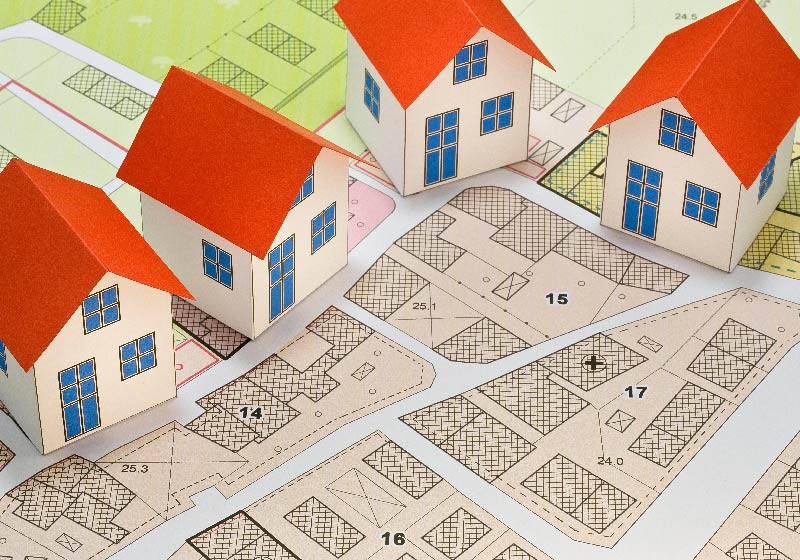
Access to affordable housing has been an ongoing issue all across North America, and communities everywhere have been searching for their own solutions. In New York City, an attempt to address this problem has led to widespread debate and plenty of tension. That attempt? New zoning laws. To be a bit more specific, New York City has a regulation known as the Floor-Area-Ratio cap (or “FAR” cap) which restricts the maximum height of new residential construction within certain areas of the city, like the historic Hell’s Kitchen. We’ve previously discussed how developers have started to convert empty office buildings into apartments in order to add housing opportunities but NYC’s FAR cap might be limiting creative solutions like this. Spectators to this discussion may find themselves wondering if these zoning laws are such a hindrance, why were they put in place originally? And if some zoning laws are only a thorn in the sides of developers, investors, and the average renter, how have they lasted this long? Let’s discuss! What are Zoning Laws?Broadening the discussion for just a second, let’s dive into a few definitions and some background information on zoning laws. To simplify, zoning laws are the rules and restrictions

People have been through a lot in recent years. Between how the pandemic limited social interactions and a general rise in nostalgia, researchers have noticed an unfortunate trend. According to Discovery ABA, a children’s therapy service provider, over 60% of adults in the US report feeling lonely, and for young adults this stat is even more shocking. With a whopping 79% of young people reporting feeling lonely, researchers are now calling Gen Z the loneliest generation. This can certainly sound dire, but there are those who also see this trend as a rising opportunity. People want to be more social, they want interaction with their neighbors, and people want a larger sense of community where they live. Since 45 million households are renters (from data collected by the National Multifamily Housing Council), property managers and multi-family property owners are in a prime position to meet the new need of this generation, and one solution managers are turning to is event planning. Not only does community event planning show that you as a property staff care about your tenants, a happier community leads to a higher retention rate and more tenant referrals (lower vacancies). If you’re interested in planning your first

Artificial intelligence (AI) has been a hot-button topic of discussion, in not only educational settings, but the workplace. Business owners and investors want to stay ahead of the curve, and employees fear becoming redundant, but to make a long story short, no one knows fully what to expect with AI. For those who are using AI in their businesses already, early tools are being lauded as time-savers, improving productivity in many different areas and limiting time spent on mundane tasks. According to Forbes, the AI market size is on track to reach $407 billion by 2027 (from $86.9 billion in 2022), which means that all industries are going to have to learn to adapt. With a new industry that’s growing so quickly, AI is going to demand its own space to expand physically. To answer this growing demand, here’s how the CRE space will answer. Answering AI’s Growing Space DemandArtificial intelligence tools need developers and specialists working in those fields, which makes tech centers particularly reactive to industry growth. Areas like the San Francisco Bay area, Boston, Seattle, and New York will need to provide adequate working options for tech employees. In the past, this meant that investors could expect

They’ve been popping up more and more in downtowns everywhere, and it’s no surprise. Mixed-use properties, or properties that incorporate more than one asset type – often with both residential housing units and commercial units – seem to be one route investors are turning to for answers to an inconsistent and unpredictable real estate market. Mixed-use properties not only provide those traditional benefits of allowing a more diverse market of renters and a more reliable portfolio staple, but many are coming to recognize the unique draw mixed-use properties can have for tenants. The Benefits of Mixed-Use PropertiesWith a larger barrier-to-entry for first-time homeowners today (see some of the latest research from experts over at Nerd Wallet), more people are opting to rent for longer. For renters who are used to living in more urbanized areas, mixed-use properties are becoming a natural draw. Buildings that include residential units and businesses like gyms, coffee shops, or grocery stores are extremely attractive to renters for a more convenient lifestyle. They also cut down on emissions for a greener, eco-conscious lifestyle. From a commercial tenant’s perspective, location and access to potential customers is always a major draw. One’s imagination can quickly go wild when

Adaptive reuse is on the rise in commercial real estate as somewhat radical shifts continue to reverberate throughout various CRE subsectors. With the mercurial nature of office and retail space utilization, finding creative ways to repurpose properties without starting from scratch is certainly in the air. This is where “adaptive reuse” comes into play. Do you own a warehouse that’s become an underused capital sink? Restore and renovate the property so that you can reopen it as trendy luxury apartments! Defunct businesses like switchboard operator buildings sitting empty? Rather than tearing it down, reopen it as a unique coffee shop or restaurant. Adaptive reuse is all about creativity and innovation while preserving the interesting historic buildings that can bring a neighborhood or a city its unique character. There are many ways for CRE investors to utilize an adaptive reuse mindset in today’s volatile market, and the benefits of this strategy just might have a considerable impact on their ROI. Common Applications for Adaptive Reuse TodayThe first form of adaptive reuse that we’re seeing pop up over and over recently is the multi-family conversion. Office buildings have continued to struggle filling up post-pandemic, and features like high ceilings, which are somewhat

Comfort and familiarity are things that people cling onto for comfort. While most are willing to venture out to a new restaurant or clothing store from time to time to “mix it up,” wider lifestyle changes are generally met with major push-back. In the realm of real estate, this fact is perhaps the most clear in instances of new construction near residential communities. Often, residents of existing communities fight to preserve the familiar feel of their neighborhoods through protesting affordable housing developments, new high-rises, or any unwanted businesses. These conflicts are natural issues for developers and property investment groups, and while these residents may not realize it immediately, derailing growth often comes back to harm their communities beyond what they expected. Change can be tough, but many cities formerly resistant to developments (notably wealthy enclaves) are starting to shift their views to their benefit. What is NIMBY?NIMBY, also sometimes known as nimbyism, is a term used in reference to groups in a community that fight in an organized manner against new developments that threaten their way of life in some manner. Standing for “Not In My Back Yard,” NIMBY started mostly to defend against environmental and public contamination in the

One of the keys to having success in commercial property investments is to stay on top of market trends and forecasts. While unpredictability in recent years has meant that diverse portfolios are the most resilient, investors are slowly discovering stability and confidence in some surprising places. Of late, many property investors are turning to student housing for their next option, and it’s little wonder why. Why Student Housing?In comparison to other commercial properties, student housing has recovered at a much quicker pace from the effects of lockdowns and the pandemic. While there has been a consistent struggle between CEOs and office workers as preferences for hybrid and full-time remote work have grown in prevalence, students’ choices aren’t changing when it comes to their education. According to the National Center for Education Statistics, even though college enrollment dropped by 15 percent from 2010 to 2021, enrollment is on track to increase by 9 percent throughout the next decade. Though undergraduate students are more willing to incorporate remote learning into their collegiate experiences than in previous years (as reported by education analysts at EdSurge, among others), the lack of sustained impact that universities are seeing from the pandemic seems to prove a
Urban downtowns have been seen as the center of city life. Recently, however, this system has been going through some growing pains.
Answering the call for housing everywhere, 2024 was truly the year of multi-family properties, as over 500,000 new units were completed by the end of December. While 2025 may see a slight step back in completions, 2 million new apartments are arriving on the market by 2028.
Commercial properties require frequent inspections for many different reasons. From new acquisitions, to lease renewals, to recurring maintenance checks, commercial inspections are a standard part of every business’ annual expenses. From a property inspector’s perspective, these jobs are great due to the more professional, less emotionally charged approach in comparison to residential inspections. Plus, commercial properties offer an opportunity to examine bigger, more complex systems in pretty much every category. Investors and property owners may find themselves wondering just how the costs for commercial inspections are determined. Even if you’re newer to the commercial inspection process, you’ve likely seen firsthand that pricing is rarely just a flat rate and that it differs significantly from residential inspection costs. Just as commercial properties serve a wide variety of purposes and come in all shapes and sizes, commercial inspectors know that they have an equally wide variety of inspection needs. While this might make the cost of a commercial inspection tougher to predict in advance, a commercial inspector who factors in all of the unique qualities of the property in their proposal is more likely to deliver a product worth the cost! So, if you’d like more insight on how pricing is determined
Access to affordable housing has been an ongoing issue all across North America, and communities everywhere have been searching for their own solutions. In New York City, an attempt to address this problem has led to widespread debate and plenty of tension. That attempt? New zoning laws. To be a bit more specific, New York City has a regulation known as the Floor-Area-Ratio cap (or “FAR” cap) which restricts the maximum height of new residential construction within certain areas of the city, like the historic Hell’s Kitchen. We’ve previously discussed how developers have started to convert empty office buildings into apartments in order to add housing opportunities but NYC’s FAR cap might be limiting creative solutions like this. Spectators to this discussion may find themselves wondering if these zoning laws are such a hindrance, why were they put in place originally? And if some zoning laws are only a thorn in the sides of developers, investors, and the average renter, how have they lasted this long? Let’s discuss! What are Zoning Laws?Broadening the discussion for just a second, let’s dive into a few definitions and some background information on zoning laws. To simplify, zoning laws are the rules and restrictions
People have been through a lot in recent years. Between how the pandemic limited social interactions and a general rise in nostalgia, researchers have noticed an unfortunate trend. According to Discovery ABA, a children’s therapy service provider, over 60% of adults in the US report feeling lonely, and for young adults this stat is even more shocking. With a whopping 79% of young people reporting feeling lonely, researchers are now calling Gen Z the loneliest generation. This can certainly sound dire, but there are those who also see this trend as a rising opportunity. People want to be more social, they want interaction with their neighbors, and people want a larger sense of community where they live. Since 45 million households are renters (from data collected by the National Multifamily Housing Council), property managers and multi-family property owners are in a prime position to meet the new need of this generation, and one solution managers are turning to is event planning. Not only does community event planning show that you as a property staff care about your tenants, a happier community leads to a higher retention rate and more tenant referrals (lower vacancies). If you’re interested in planning your first
Artificial intelligence (AI) has been a hot-button topic of discussion, in not only educational settings, but the workplace. Business owners and investors want to stay ahead of the curve, and employees fear becoming redundant, but to make a long story short, no one knows fully what to expect with AI. For those who are using AI in their businesses already, early tools are being lauded as time-savers, improving productivity in many different areas and limiting time spent on mundane tasks. According to Forbes, the AI market size is on track to reach $407 billion by 2027 (from $86.9 billion in 2022), which means that all industries are going to have to learn to adapt. With a new industry that’s growing so quickly, AI is going to demand its own space to expand physically. To answer this growing demand, here’s how the CRE space will answer. Answering AI’s Growing Space DemandArtificial intelligence tools need developers and specialists working in those fields, which makes tech centers particularly reactive to industry growth. Areas like the San Francisco Bay area, Boston, Seattle, and New York will need to provide adequate working options for tech employees. In the past, this meant that investors could expect
They’ve been popping up more and more in downtowns everywhere, and it’s no surprise. Mixed-use properties, or properties that incorporate more than one asset type – often with both residential housing units and commercial units – seem to be one route investors are turning to for answers to an inconsistent and unpredictable real estate market. Mixed-use properties not only provide those traditional benefits of allowing a more diverse market of renters and a more reliable portfolio staple, but many are coming to recognize the unique draw mixed-use properties can have for tenants. The Benefits of Mixed-Use PropertiesWith a larger barrier-to-entry for first-time homeowners today (see some of the latest research from experts over at Nerd Wallet), more people are opting to rent for longer. For renters who are used to living in more urbanized areas, mixed-use properties are becoming a natural draw. Buildings that include residential units and businesses like gyms, coffee shops, or grocery stores are extremely attractive to renters for a more convenient lifestyle. They also cut down on emissions for a greener, eco-conscious lifestyle. From a commercial tenant’s perspective, location and access to potential customers is always a major draw. One’s imagination can quickly go wild when
Adaptive reuse is on the rise in commercial real estate as somewhat radical shifts continue to reverberate throughout various CRE subsectors. With the mercurial nature of office and retail space utilization, finding creative ways to repurpose properties without starting from scratch is certainly in the air. This is where “adaptive reuse” comes into play. Do you own a warehouse that’s become an underused capital sink? Restore and renovate the property so that you can reopen it as trendy luxury apartments! Defunct businesses like switchboard operator buildings sitting empty? Rather than tearing it down, reopen it as a unique coffee shop or restaurant. Adaptive reuse is all about creativity and innovation while preserving the interesting historic buildings that can bring a neighborhood or a city its unique character. There are many ways for CRE investors to utilize an adaptive reuse mindset in today’s volatile market, and the benefits of this strategy just might have a considerable impact on their ROI. Common Applications for Adaptive Reuse TodayThe first form of adaptive reuse that we’re seeing pop up over and over recently is the multi-family conversion. Office buildings have continued to struggle filling up post-pandemic, and features like high ceilings, which are somewhat
Comfort and familiarity are things that people cling onto for comfort. While most are willing to venture out to a new restaurant or clothing store from time to time to “mix it up,” wider lifestyle changes are generally met with major push-back. In the realm of real estate, this fact is perhaps the most clear in instances of new construction near residential communities. Often, residents of existing communities fight to preserve the familiar feel of their neighborhoods through protesting affordable housing developments, new high-rises, or any unwanted businesses. These conflicts are natural issues for developers and property investment groups, and while these residents may not realize it immediately, derailing growth often comes back to harm their communities beyond what they expected. Change can be tough, but many cities formerly resistant to developments (notably wealthy enclaves) are starting to shift their views to their benefit. What is NIMBY?NIMBY, also sometimes known as nimbyism, is a term used in reference to groups in a community that fight in an organized manner against new developments that threaten their way of life in some manner. Standing for “Not In My Back Yard,” NIMBY started mostly to defend against environmental and public contamination in the
One of the keys to having success in commercial property investments is to stay on top of market trends and forecasts. While unpredictability in recent years has meant that diverse portfolios are the most resilient, investors are slowly discovering stability and confidence in some surprising places. Of late, many property investors are turning to student housing for their next option, and it’s little wonder why. Why Student Housing?In comparison to other commercial properties, student housing has recovered at a much quicker pace from the effects of lockdowns and the pandemic. While there has been a consistent struggle between CEOs and office workers as preferences for hybrid and full-time remote work have grown in prevalence, students’ choices aren’t changing when it comes to their education. According to the National Center for Education Statistics, even though college enrollment dropped by 15 percent from 2010 to 2021, enrollment is on track to increase by 9 percent throughout the next decade. Though undergraduate students are more willing to incorporate remote learning into their collegiate experiences than in previous years (as reported by education analysts at EdSurge, among others), the lack of sustained impact that universities are seeing from the pandemic seems to prove a