
Tag: interior maintenance

The Biggest Electrical Red Flags From A Professional Commercial Property Inspector

Attracting and retaining top commercial tenants can be difficult. In competitive markets, managers and property owners need to capitalize any way they can to get their locations to stand out. Often, this can mean redesigning and modernizing interior layouts, investing in particular amenities, or maybe even incorporating public art. While amenities are important, every marketing strategy should start with upkeep. Keeping a commercial building safe and well-maintained is the only way to forge a sterling reputation and instill confidence in key tenants. With this in mind, it’s every good property owner’s job to make sure their electrical systems are secure and safe. Every commercial property needs consistent attention and diligent observation, otherwise small problems could result in drops in energy efficiency, increased costs, or even electrical fires. To take action today, here are the biggest red flags in commercial electrical systems. Older buildings or locations that don’t utilize safe, grounded outlets should look to update their systems as quickly as possible. Commercial property inspectors use voltage testers on power outlets as part of a standard building inspection in order to identify any outdated, damaged, or faulty outlets that might present fire hazards. Wiring can become degraded naturally over time as

Read More »

Use Energy Audits to Benefit Your Business

Property and business owners are constantly searching for ways to improve their ROI and cut costs when possible. Despite this, the Environmental Protection Agency (EPA) has found that commercial buildings waste 30% of their energy budget on average. In an industry that sees constant innovations, property owners can look to minimize deterioration and update their primary energy-consuming systems by performing a commercial energy audit with a trained professional. What is a Commercial Energy Audit?A commercial energy audit is a comprehensive inspection performed by a professional energy auditor of a building or campus. While every energy audit is customized to fit the needs of the building, each auditor follows the best standards of practice as outlined by bodies like the American Society of Heating, Refrigerating, and Air-Conditioning Engineers (ASHRAE). In an effort to standardize energy audits, ASHRAE has divided these consultations into three separate levels, with the analysis increasing in detail with each step. Residential energy audits tend to stick to the first level, consisting mostly of a basic walkthrough, while commercial energy audits may be more comprehensive. Regardless of the level of audit, the property owner will receive a detailed report with action items to increase energy efficiency. What is

Read More »

The Pros and Cons of Triple-Net Leases for Tenants and Property Owners

For anyone new to the world of commercial real estate, triple-net leases are a concept worth exploring. Also referred to as “NNN” leases, triple-net leases have become very popular for property owners and tenants alike. To determine which type of lease is right for your needs, let’s take a minute to discuss what a triple-net lease is—and why they’re growing in popularity! What is a Triple-Net Lease?Triple-Net leases are a type of rental agreement where the tenant is responsible for paying property taxes, insurance, and all maintenance fees associated with the rental property. These differ from standard commercial lease agreements where these costs are usually covered by the property owner or manager. To compensate for these additional incurred costs and responsibilities, the tenants’ rental fees are oftentimes lower than standard rental agreements. As you might have guessed, the triple-net lease is more demanding for tenants than single-net or double-net leases. In either of these cases, the tenant would instead be responsible for one or two costs respectively (between property taxes, insurance, and maintenance items). The Benefits of Triple-Net LeasesProperty owners seem particularly interested in this type agreement because of the hands-off approach that they can have with the property. Property

Read More »

Commercial Thermography Inspections: An Underutilized Cost-Saving Strategy

Homeowners know very well how much their energy bills can hurt the wallet throughout the year. For commercial property owners, those energy bills are considerably more punishing. While homeowners can search for ways to cut down on spending, such as adding insulation to their attics, or resealing their windows, commercial property owners too often see energy as a standard cost of operation without much room for adjustment. Of course, with a much larger space to examine, commercial properties can be much more intimidating to survey and that much more difficult to identify areas for improvement. According to Constellation, a leading commercial power supplier in the United States, 40% of the total energy consumption for office buildings comes from heating and cooling alone. Depending on the industry and size of the building, this percentage can be even higher. Commercial property owners are, unfortunately, mostly missing out on these savings that are more accessible for homeowners due to sheer size. To combat this issue, the best answer for property owners is to get a thermographic inspection. What is Thermography? Thermography is a type of scan conducted by property inspectors to find thermal anomalies and air leaks within a building. “Thermographers” use one

Read More »

Save On Taxes With Cost Segregation

In the world of commercial real estate, any opportunity to save money can be retooled back into properties to improve amenities, elevate tenant experience, or even invest in new ventures. Cost segregation is a tax-saving method that is not taken advantage of as often as it should. In partnership with Scarpello Consulting, National Property Inspections is now offering cost segregation services to preferred commercial property clients. Cost segregation can seem like a complex topic to those unfamiliar with the concept, but it is more straightforward than the name might suggest. To discover whether you may qualify for cost segregation, let’s take the time to discuss what it is and how it works. What Is Cost Segregation? Cost segregation is a tax savings tool used to reduce the income tax liabilities of property owners by accelerating depreciation deductions. A cost segregation study is conducted to evaluate a qualifying property and track its components on a shortened scale, usually after 5, 7, or 15 years rather than the traditional 27.5 or 39 year period. This allows owners to write-off components much earlier than usual, saving considerably on property taxes. While there is an initial cost with a cost segregation study, the tax

Read More »

How To Be Proactive With Property Maintenance

There are many things to worry about when managing a successful commercial real estate property. You have to find great tenants that will improve your property’s overall draw, while also figuring out how to retain those high-value tenants through updated amenities or through competitive rental prices. It is understandable that some things can fall to the wayside. Oftentimes, the thing that gets shorted is maintenance. Keeping your property clean and functional is, of course, vital to successful business, but too often, property managers and owners only resort to significant moves after it is too late. Something critical breaks down, or even an injury to a tenant are sometimes the only thing that prompts owners to make meaningful changes. Investing into a solid maintenance plan foregoes these disastrous scenarios, and the best type of maintenance plan, is one that is proactive. What is Proactive Maintenance?Proactive Maintenance Plans are strategies that property managers and owners employ to avert costly maintenance issues before things deteriorate beyond salvageability. The opposite of this strategy would be a Reactive Maintenance Plan, or maintenance techniques that only prompt action after a feature of a commercial property becomes unusable, requiring either major repairs or complete replacement. With proactive

Read More »

What It Means to Inspect: Differing Views for Different Industries

In the inspection industry, we work in close relation with those in the insurance industry, property management companies, real estate agents, and of course, property owners. Although these trades may align in some areas, a point where they all differ is in the definition of what it means to have an inspection performed. While you might assume that the definition of a property inspection would bear the same weight across the board, you may be surprised at the fact that it actually doesn’t. For clarification’s sake, we’re going to examine the idea of what inspections mean for different industries and how our scope of work may change depending on the needs of our unique client types. Inspection Basics The definition of what an inspection entails for an inspector is very different from what the average consumer, property management company, or insurance agents would assume. According to the International Association of Certified Home Inspectors (InterNACHI), the definition of inspection is: “To examine readily accessible systems and components safely, using normal operating controls, and accessing readily accessible areas, in accordance with the Standards of Practice.” This basically means that everything that one can see or operate within reason are fair game for

Read More »

Caring for the Paint of Your Commercial Property

Whether you’re leasing, selling, or renting a commercial property, it’s essential to know proper upkeep techniques for the paint on both your interior and exterior walls. The painting of your property is not just important to the aesthetics of your commercial space, but for the overall improvement of the physical condition of your business front. While curb appeal is an important selling point, interior walls are just as significant. While the underlying reasons to care for the paint on the inside and outside of your development are parallel, the process of doing so differs vastly in technique. This is due to the difference of daily environmental hazards each surface faces. However, for both indoor and outdoor spaces the process of house washing is a must. House washing is a term that refers to the maintenance of the painted structures of your home and commercial properties. This technique can be implemented on various materials and paint types. House washing protects the outer barrier of buildings from attracting unwanted erosion, rust, and debris. On inside surfaces, house washing acts as a protectant of high gloss paints, preserving the integrity of the wood while upholding the overall appearance of the paint. Although inside,

Read More »

How to Prevent Bed Bugs & What To Do If You Ever Have an Infestation

This week is Bed Bug Awareness Week. Although bed bugs are tough to rid your property of, there are many effective treatment options available. It is important to know the warning signs of an infestation, as it can be more than a minor annoyance. An infestation can actually negatively affect your health by taking over your property and anything stored within it. Whether you’re a commercial building manager or owner, it is essential to recognize the signs of an outbreak on your property. CausesBed bug outbreaks can be caused by an assortment of factors. While it has always been thought that bed bug outbreaks only happen in dirty environments, this is actually a myth. Issues with bed bugs can appear in even the cleanest spaces. Bed bug infestations typically occur as the result of buying used household items and furniture, after traveling to densely populated areas, following vacations aboard cruise ships, and after staying in already-infested hotels. Transportation is the common theme for all the main causes of bed bug infestations. Bed bugs are notorious for their ability to “hitchhike” from one area to the next, making them easy to take with you to your commercial property and home. According

Read More »

Being a Commercial Tenant Isn’t Always Easy… Here’s How Partnering with NPI Can Help

As a commercial property tenant, you have the challenging task of servicing your clients while also preserving maintenance obligations per your contract to the property owner. In the case of long-term leases, these agreements can include being responsible for major repairs to the exterior and interior of the building. These repairs can become costly, especially if there’s a stipulation requiring anything electrical or involving the replacement of the roof. Here’s where NPI comes in. Prior to signing on the dotted line for the lease, it’s important to have a third-party inspection done. Although you may have done a walk-through with the building’s owner, or in some cases a real estate agent, getting an unbiased opinion of the prospective property could save you in the long-run. To the naked eye, one may see a sparkling exterior fully equipped with impressive features galore. However, what lies beneath on the interior could be a myriad of problems from issues with the building’s sewer lines, to electrical issues, HVAC problems, or even worse, a blighted roof. By incorporating an NPI inspection into your pre-signing procedures, you could potentially avoid making a huge mistake by not consenting to lease a nightmare of a property. Inspections

Read More »

The Biggest Electrical Red Flags From A Professional Commercial Property Inspector

Attracting and retaining top commercial tenants can be difficult. In competitive markets, managers and property owners need to capitalize any way they can to get their locations to stand out. Often, this can mean redesigning and modernizing interior layouts, investing in particular amenities, or maybe even incorporating public art. While amenities are important, every marketing strategy should start with upkeep. Keeping a commercial building safe and well-maintained is the only way to forge a sterling reputation and instill confidence in key tenants. With this in mind, it’s every good property owner’s job to make sure their electrical systems are secure and safe. Every commercial property needs consistent attention and diligent observation, otherwise small problems could result in drops in energy efficiency, increased costs, or even electrical fires. To take action today, here are the biggest red flags in commercial electrical systems. Older buildings or locations that don’t utilize safe, grounded outlets should look to update their systems as quickly as possible. Commercial property inspectors use voltage testers on power outlets as part of a standard building inspection in order to identify any outdated, damaged, or faulty outlets that might present fire hazards. Wiring can become degraded naturally over time as
Read More »

Use Energy Audits to Benefit Your Business

Property and business owners are constantly searching for ways to improve their ROI and cut costs when possible. Despite this, the Environmental Protection Agency (EPA) has found that commercial buildings waste 30% of their energy budget on average. In an industry that sees constant innovations, property owners can look to minimize deterioration and update their primary energy-consuming systems by performing a commercial energy audit with a trained professional. What is a Commercial Energy Audit?A commercial energy audit is a comprehensive inspection performed by a professional energy auditor of a building or campus. While every energy audit is customized to fit the needs of the building, each auditor follows the best standards of practice as outlined by bodies like the American Society of Heating, Refrigerating, and Air-Conditioning Engineers (ASHRAE). In an effort to standardize energy audits, ASHRAE has divided these consultations into three separate levels, with the analysis increasing in detail with each step. Residential energy audits tend to stick to the first level, consisting mostly of a basic walkthrough, while commercial energy audits may be more comprehensive. Regardless of the level of audit, the property owner will receive a detailed report with action items to increase energy efficiency. What is

Read More »

The Pros and Cons of Triple-Net Leases for Tenants and Property Owners

For anyone new to the world of commercial real estate, triple-net leases are a concept worth exploring. Also referred to as “NNN” leases, triple-net leases have become very popular for property owners and tenants alike. To determine which type of lease is right for your needs, let’s take a minute to discuss what a triple-net lease is—and why they’re growing in popularity! What is a Triple-Net Lease?Triple-Net leases are a type of rental agreement where the tenant is responsible for paying property taxes, insurance, and all maintenance fees associated with the rental property. These differ from standard commercial lease agreements where these costs are usually covered by the property owner or manager. To compensate for these additional incurred costs and responsibilities, the tenants’ rental fees are oftentimes lower than standard rental agreements. As you might have guessed, the triple-net lease is more demanding for tenants than single-net or double-net leases. In either of these cases, the tenant would instead be responsible for one or two costs respectively (between property taxes, insurance, and maintenance items). The Benefits of Triple-Net LeasesProperty owners seem particularly interested in this type agreement because of the hands-off approach that they can have with the property. Property

Read More »

Commercial Thermography Inspections: An Underutilized Cost-Saving Strategy

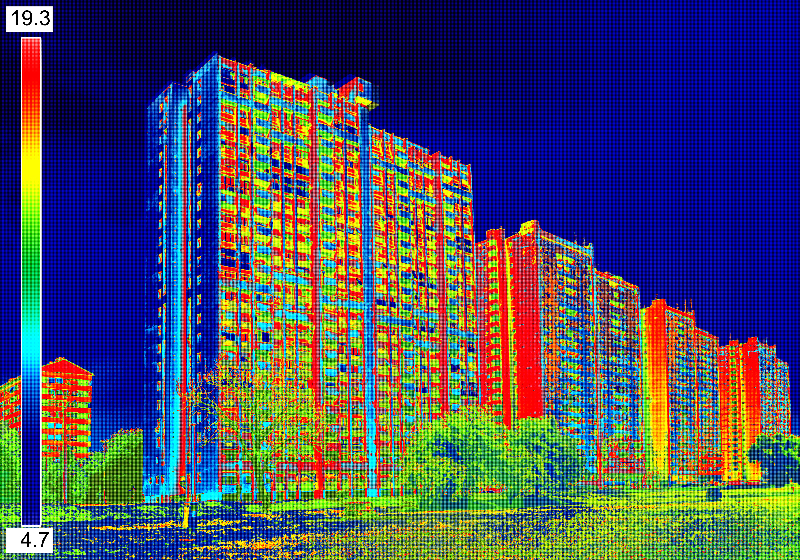
Homeowners know very well how much their energy bills can hurt the wallet throughout the year. For commercial property owners, those energy bills are considerably more punishing. While homeowners can search for ways to cut down on spending, such as adding insulation to their attics, or resealing their windows, commercial property owners too often see energy as a standard cost of operation without much room for adjustment. Of course, with a much larger space to examine, commercial properties can be much more intimidating to survey and that much more difficult to identify areas for improvement. According to Constellation, a leading commercial power supplier in the United States, 40% of the total energy consumption for office buildings comes from heating and cooling alone. Depending on the industry and size of the building, this percentage can be even higher. Commercial property owners are, unfortunately, mostly missing out on these savings that are more accessible for homeowners due to sheer size. To combat this issue, the best answer for property owners is to get a thermographic inspection. What is Thermography? Thermography is a type of scan conducted by property inspectors to find thermal anomalies and air leaks within a building. “Thermographers” use one

Read More »

Save On Taxes With Cost Segregation

In the world of commercial real estate, any opportunity to save money can be retooled back into properties to improve amenities, elevate tenant experience, or even invest in new ventures. Cost segregation is a tax-saving method that is not taken advantage of as often as it should. In partnership with Scarpello Consulting, National Property Inspections is now offering cost segregation services to preferred commercial property clients. Cost segregation can seem like a complex topic to those unfamiliar with the concept, but it is more straightforward than the name might suggest. To discover whether you may qualify for cost segregation, let’s take the time to discuss what it is and how it works. What Is Cost Segregation? Cost segregation is a tax savings tool used to reduce the income tax liabilities of property owners by accelerating depreciation deductions. A cost segregation study is conducted to evaluate a qualifying property and track its components on a shortened scale, usually after 5, 7, or 15 years rather than the traditional 27.5 or 39 year period. This allows owners to write-off components much earlier than usual, saving considerably on property taxes. While there is an initial cost with a cost segregation study, the tax

Read More »

How To Be Proactive With Property Maintenance

There are many things to worry about when managing a successful commercial real estate property. You have to find great tenants that will improve your property’s overall draw, while also figuring out how to retain those high-value tenants through updated amenities or through competitive rental prices. It is understandable that some things can fall to the wayside. Oftentimes, the thing that gets shorted is maintenance. Keeping your property clean and functional is, of course, vital to successful business, but too often, property managers and owners only resort to significant moves after it is too late. Something critical breaks down, or even an injury to a tenant are sometimes the only thing that prompts owners to make meaningful changes. Investing into a solid maintenance plan foregoes these disastrous scenarios, and the best type of maintenance plan, is one that is proactive. What is Proactive Maintenance?Proactive Maintenance Plans are strategies that property managers and owners employ to avert costly maintenance issues before things deteriorate beyond salvageability. The opposite of this strategy would be a Reactive Maintenance Plan, or maintenance techniques that only prompt action after a feature of a commercial property becomes unusable, requiring either major repairs or complete replacement. With proactive

Read More »

What It Means to Inspect: Differing Views for Different Industries

In the inspection industry, we work in close relation with those in the insurance industry, property management companies, real estate agents, and of course, property owners. Although these trades may align in some areas, a point where they all differ is in the definition of what it means to have an inspection performed. While you might assume that the definition of a property inspection would bear the same weight across the board, you may be surprised at the fact that it actually doesn’t. For clarification’s sake, we’re going to examine the idea of what inspections mean for different industries and how our scope of work may change depending on the needs of our unique client types. Inspection Basics The definition of what an inspection entails for an inspector is very different from what the average consumer, property management company, or insurance agents would assume. According to the International Association of Certified Home Inspectors (InterNACHI), the definition of inspection is: “To examine readily accessible systems and components safely, using normal operating controls, and accessing readily accessible areas, in accordance with the Standards of Practice.” This basically means that everything that one can see or operate within reason are fair game for

Read More »

Caring for the Paint of Your Commercial Property

Whether you’re leasing, selling, or renting a commercial property, it’s essential to know proper upkeep techniques for the paint on both your interior and exterior walls. The painting of your property is not just important to the aesthetics of your commercial space, but for the overall improvement of the physical condition of your business front. While curb appeal is an important selling point, interior walls are just as significant. While the underlying reasons to care for the paint on the inside and outside of your development are parallel, the process of doing so differs vastly in technique. This is due to the difference of daily environmental hazards each surface faces. However, for both indoor and outdoor spaces the process of house washing is a must. House washing is a term that refers to the maintenance of the painted structures of your home and commercial properties. This technique can be implemented on various materials and paint types. House washing protects the outer barrier of buildings from attracting unwanted erosion, rust, and debris. On inside surfaces, house washing acts as a protectant of high gloss paints, preserving the integrity of the wood while upholding the overall appearance of the paint. Although inside,

Read More »

How to Prevent Bed Bugs & What To Do If You Ever Have an Infestation

This week is Bed Bug Awareness Week. Although bed bugs are tough to rid your property of, there are many effective treatment options available. It is important to know the warning signs of an infestation, as it can be more than a minor annoyance. An infestation can actually negatively affect your health by taking over your property and anything stored within it. Whether you’re a commercial building manager or owner, it is essential to recognize the signs of an outbreak on your property. CausesBed bug outbreaks can be caused by an assortment of factors. While it has always been thought that bed bug outbreaks only happen in dirty environments, this is actually a myth. Issues with bed bugs can appear in even the cleanest spaces. Bed bug infestations typically occur as the result of buying used household items and furniture, after traveling to densely populated areas, following vacations aboard cruise ships, and after staying in already-infested hotels. Transportation is the common theme for all the main causes of bed bug infestations. Bed bugs are notorious for their ability to “hitchhike” from one area to the next, making them easy to take with you to your commercial property and home. According

Read More »

Being a Commercial Tenant Isn’t Always Easy… Here’s How Partnering with NPI Can Help

As a commercial property tenant, you have the challenging task of servicing your clients while also preserving maintenance obligations per your contract to the property owner. In the case of long-term leases, these agreements can include being responsible for major repairs to the exterior and interior of the building. These repairs can become costly, especially if there’s a stipulation requiring anything electrical or involving the replacement of the roof. Here’s where NPI comes in. Prior to signing on the dotted line for the lease, it’s important to have a third-party inspection done. Although you may have done a walk-through with the building’s owner, or in some cases a real estate agent, getting an unbiased opinion of the prospective property could save you in the long-run. To the naked eye, one may see a sparkling exterior fully equipped with impressive features galore. However, what lies beneath on the interior could be a myriad of problems from issues with the building’s sewer lines, to electrical issues, HVAC problems, or even worse, a blighted roof. By incorporating an NPI inspection into your pre-signing procedures, you could potentially avoid making a huge mistake by not consenting to lease a nightmare of a property. Inspections

Read More »