
The 4 Stages of the Asset Life Cycle (And How Inspections Help With Each Step!)
Today, let’s review exactly what the asset life cycle is, and how property inspections can drive long-term success.

Today, let’s review exactly what the asset life cycle is, and how property inspections can drive long-term success.

While sometimes regarded as risky, distressed properties can also be a very lucrative and fulfilling investment option. Let’s discuss from a bird’s eye view how you can feel more comfortable buying and flipping properties that might need extra TLC.
You may not have noticed, but this is actually an election year. That’s right! Currently, the two major parties are jockeying for political seats all across the United States at the local, state, and federal levels. All jokes aside, especially in our polarized political climate, it can often feel like the presence of an election year touches every industry and every aspect of our daily lives. For those who work in the real estate industry or anything tangential to commercial real estate, you’re certainly aware of the ominous reputation associated with election years. According to prevailing belief, election years wreak havoc on investments–projects can stall as uncertainty muddies the waters until the market finally comes up for air post-election. Though this is the prominent impression, do election years truly have such an outsize impact? Or is this another myth causing hesitation from quality opportunities? Let’s take a look! Political Factors that Impact CRECommercial real estate is, of course, influenced by many policies from the local level all the way to the white house. From tax codes to zoning laws, policies can fluctuate from administration to administration, which certainly affects investment plans. Additionally, one candidate may focus on a particular issue
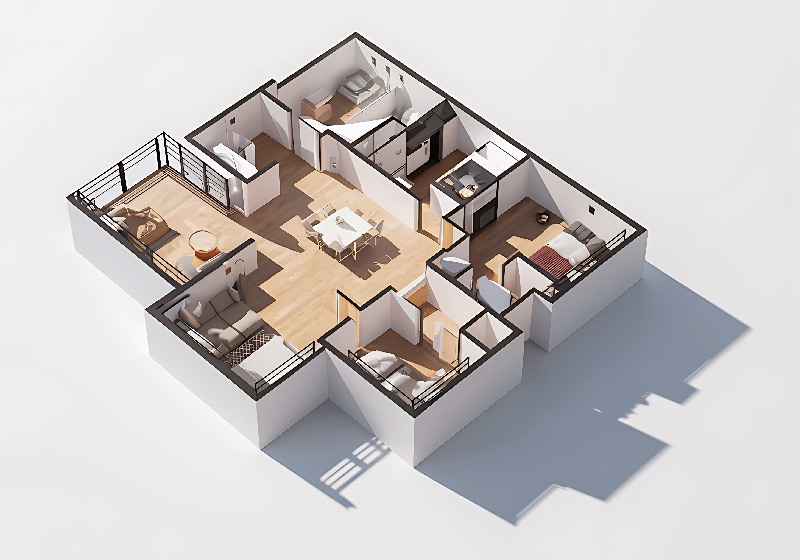
As Bob Dylan once said: the times, they are a-changin.’ For office spaces, this means contending with the demands of remote workers. For warehousing, this means balancing the demands of a growing e-commerce industry with a normalizing retail sector. Factors that ripple out and affect many different facets of life certainly have their own touch on commercial real estate, but in an industry that’s frequently criticized as slow to adapt to the newest technologies, maybe the times are bringing more changes to CRE in 2024 than ever before. Proptech is a catch-all term referring to the cross section of new technologies with residential and commercial real estate. While some tech integrations with the every-day of property management and the buying/selling process have streamlined the commercial real estate industry already, some are looking at the residential proptech seen in smart homes and speculating at the eye-popping changes sure to come soon. Today, let’s review a few of those types of proptech that are creating waves in CRE in 2024! Virtual Tours and 3D Floor PlansIn general, proptech that’s been gaining popularity in CRE are the types that cut down drastically on wasted time, and a few techniques that are great at

It seems the rumors of the modern shopping mall’s demise have been greatly exaggerated. For years, the rise of convenient e-commerce alternatives cast a shadow over the once-bustling indoor mall. Vacancies increased, and foot traffic steadily declined. The pandemic further fueled the narrative of the shopping mall’s inevitable death, a stark contrast to its heyday as the North American public square in the 80s and 90s. However, a recent study by Placer.ai, an analytics company specializing in commercial real estate data, paints a brighter picture. They compared indoor mall, open-air shopping center, and outlet mall visits in 2024 to pre-pandemic (2019) levels. The results show shoppers are returning, with open-air centers exceeding 2019 numbers for the first time in Q1 of 2024. Indoor malls and outlet malls are lagging behind, but indoor malls have rebounded significantly, going from nearly 30% less traffic in Q1 2021 to only 5% below 2019 numbers in Q1 2024. While many malls are thriving in 2024, the growth isn’t universal. Let’s explore the factors contributing to success in this evolving market. A Smaller, More Streamlined InventoryIt’s important to note that not all malls are experiencing the recovery. Industry analysts suggest there are still too many

Artificial intelligence (AI) has been a hot-button topic of discussion, in not only educational settings, but the workplace. Business owners and investors want to stay ahead of the curve, and employees fear becoming redundant, but to make a long story short, no one knows fully what to expect with AI. For those who are using AI in their businesses already, early tools are being lauded as time-savers, improving productivity in many different areas and limiting time spent on mundane tasks. According to Forbes, the AI market size is on track to reach $407 billion by 2027 (from $86.9 billion in 2022), which means that all industries are going to have to learn to adapt. With a new industry that’s growing so quickly, AI is going to demand its own space to expand physically. To answer this growing demand, here’s how the CRE space will answer. Answering AI’s Growing Space DemandArtificial intelligence tools need developers and specialists working in those fields, which makes tech centers particularly reactive to industry growth. Areas like the San Francisco Bay area, Boston, Seattle, and New York will need to provide adequate working options for tech employees. In the past, this meant that investors could expect

As property inspectors, we have significant experience in navigating the wider real estate industry and getting to know the needs of real estate agents, homeowners, brokers, and property investors. People in all roles can see success with real estate investments, but to find the best investment strategy, it’s crucial to first identify just what kind of property owner you plan on being, especially when it comes to your long-term goals. While there are many different classes of commercial real estate that property owners tend to specialize in, the first major factor that new investors need to consider is whether they want to target single-tenant or multi-tenant properties. Both varieties offer their own strengths and weaknesses, but to determine which type is best for your situation, start by deciding how “hands-on” you’d like to be. The “Hands-On” FactorSingle-tenant properties tend to utilize a unique type of lease contract known as NNN or Triple-Net leases, which gives property management and maintenance responsibility to the tenant. Although some lease agreements still require action from landlords, these triple-net leases mean that single-tenant property ownership is extremely hands-off, allowing landlords plenty of freedom to pursue other business interests but a low level of control on

Across commercial real estate sectors, various amenities rise and fall in prominence each year as investors track what attracts top-tier tenants and drives business. In the face of increasing urbanization where city center locations are in high demand, one property trait that’s been steadily gaining attention is walkability. But what does it look like when a property has good walkability, and is there anything that owners and investors can do to improve this feature? Let’s delve deeper into this subject to provide some clarity. What is Walkability?Walkability is an overarching term referring to a property’s proximity to other businesses that serve its tenants and visitors, and to the number and quality of pedestrian-friendly characteristics present. For apartment buildings, this might include benches or bike racks around the exterior, and parks or grocery stores nearby. For office buildings, a coffee shop opening on the ground floor could be a prime example. The benefits of investing in walkability are numerous. It reinforces healthy habits, has positive environmental effects, and revitalizes communities. However, the real reason why walkability is becoming a bigger focus today is the trackable evidence it has on investors’ pocketbooks. How Does it Impact Commercial Real Estate (CRE)?The importance of

It’s been a long road, but after fires devastated the Notre Dame Cathedral back in 2019, the historic landmark is finally preparing to reopen its doors later this year. Restoring and renovating historic buildings can be costly and time-consuming, but the cultural, educational, and economic benefits down the road often make the effort worthwhile. A building doesn’t need to be internationally recognized like the Notre Dame Cathedral to justify the investment of a restoration, though! Every city has its own share of locations that carry historical significance. But preserving history isn’t the only reason property owners find these projects worthwhile. According to the Environmental Protection Agency (EPA), building preservation can also improve sustainability on top of the community revitalization and economic benefits. For any property owners interested in restoring or updating a historic property, here are a few things to consider! Modernize with CareA common misconception during restoration is that modern amenities are out of the question, but this isn’t the case. Building system standards are improved upon every year for safety and efficiency, and restorations are the perfect opportunity to bring historic properties up to speed. The challenge comes with updating without compromising the building’s integrity. Depending on the

From time to time a trend pops up in commercial real estate that’s interesting or strange enough to get a conversation going. Throughout the pandemic, when businesses were struggling everywhere, the trend that captured the imagination of entrepreneurs in the midst of a chaotic restaurant industry was “ghost kitchens” (we wrote about it, too!). While restaurants, retail stores, and other businesses tried to adapt to new expectations from their customers, the freedom and flexibility from ghost kitchens made some believe that they would make up 20% of the restaurant industry by 2025 (per CNN). After such lofty predictions, it may be a shock to see businesses like Kitchen United, Butler Hospitality, and CloudKitchens pulling back in a big way after their own considerable investments in the ghost kitchen concept. So, what happened? And what can we learn from this trend’s near meteoric rise and sudden fall? What are Ghost Kitchens?To recap, ghost kitchens (also known as cloud kitchens, virtual kitchens, and dark kitchens) are businesses that offer a delivery-only menu, with no available dine-in options for their customers and no unique signage on their location for identification. Because of this (although these businesses existed before the pandemic), ghost kitchens rose
Today, let’s review exactly what the asset life cycle is, and how property inspections can drive long-term success.
While sometimes regarded as risky, distressed properties can also be a very lucrative and fulfilling investment option. Let’s discuss from a bird’s eye view how you can feel more comfortable buying and flipping properties that might need extra TLC.
You may not have noticed, but this is actually an election year. That’s right! Currently, the two major parties are jockeying for political seats all across the United States at the local, state, and federal levels. All jokes aside, especially in our polarized political climate, it can often feel like the presence of an election year touches every industry and every aspect of our daily lives. For those who work in the real estate industry or anything tangential to commercial real estate, you’re certainly aware of the ominous reputation associated with election years. According to prevailing belief, election years wreak havoc on investments–projects can stall as uncertainty muddies the waters until the market finally comes up for air post-election. Though this is the prominent impression, do election years truly have such an outsize impact? Or is this another myth causing hesitation from quality opportunities? Let’s take a look! Political Factors that Impact CRECommercial real estate is, of course, influenced by many policies from the local level all the way to the white house. From tax codes to zoning laws, policies can fluctuate from administration to administration, which certainly affects investment plans. Additionally, one candidate may focus on a particular issue
As Bob Dylan once said: the times, they are a-changin.’ For office spaces, this means contending with the demands of remote workers. For warehousing, this means balancing the demands of a growing e-commerce industry with a normalizing retail sector. Factors that ripple out and affect many different facets of life certainly have their own touch on commercial real estate, but in an industry that’s frequently criticized as slow to adapt to the newest technologies, maybe the times are bringing more changes to CRE in 2024 than ever before. Proptech is a catch-all term referring to the cross section of new technologies with residential and commercial real estate. While some tech integrations with the every-day of property management and the buying/selling process have streamlined the commercial real estate industry already, some are looking at the residential proptech seen in smart homes and speculating at the eye-popping changes sure to come soon. Today, let’s review a few of those types of proptech that are creating waves in CRE in 2024! Virtual Tours and 3D Floor PlansIn general, proptech that’s been gaining popularity in CRE are the types that cut down drastically on wasted time, and a few techniques that are great at
It seems the rumors of the modern shopping mall’s demise have been greatly exaggerated. For years, the rise of convenient e-commerce alternatives cast a shadow over the once-bustling indoor mall. Vacancies increased, and foot traffic steadily declined. The pandemic further fueled the narrative of the shopping mall’s inevitable death, a stark contrast to its heyday as the North American public square in the 80s and 90s. However, a recent study by Placer.ai, an analytics company specializing in commercial real estate data, paints a brighter picture. They compared indoor mall, open-air shopping center, and outlet mall visits in 2024 to pre-pandemic (2019) levels. The results show shoppers are returning, with open-air centers exceeding 2019 numbers for the first time in Q1 of 2024. Indoor malls and outlet malls are lagging behind, but indoor malls have rebounded significantly, going from nearly 30% less traffic in Q1 2021 to only 5% below 2019 numbers in Q1 2024. While many malls are thriving in 2024, the growth isn’t universal. Let’s explore the factors contributing to success in this evolving market. A Smaller, More Streamlined InventoryIt’s important to note that not all malls are experiencing the recovery. Industry analysts suggest there are still too many
Artificial intelligence (AI) has been a hot-button topic of discussion, in not only educational settings, but the workplace. Business owners and investors want to stay ahead of the curve, and employees fear becoming redundant, but to make a long story short, no one knows fully what to expect with AI. For those who are using AI in their businesses already, early tools are being lauded as time-savers, improving productivity in many different areas and limiting time spent on mundane tasks. According to Forbes, the AI market size is on track to reach $407 billion by 2027 (from $86.9 billion in 2022), which means that all industries are going to have to learn to adapt. With a new industry that’s growing so quickly, AI is going to demand its own space to expand physically. To answer this growing demand, here’s how the CRE space will answer. Answering AI’s Growing Space DemandArtificial intelligence tools need developers and specialists working in those fields, which makes tech centers particularly reactive to industry growth. Areas like the San Francisco Bay area, Boston, Seattle, and New York will need to provide adequate working options for tech employees. In the past, this meant that investors could expect
As property inspectors, we have significant experience in navigating the wider real estate industry and getting to know the needs of real estate agents, homeowners, brokers, and property investors. People in all roles can see success with real estate investments, but to find the best investment strategy, it’s crucial to first identify just what kind of property owner you plan on being, especially when it comes to your long-term goals. While there are many different classes of commercial real estate that property owners tend to specialize in, the first major factor that new investors need to consider is whether they want to target single-tenant or multi-tenant properties. Both varieties offer their own strengths and weaknesses, but to determine which type is best for your situation, start by deciding how “hands-on” you’d like to be. The “Hands-On” FactorSingle-tenant properties tend to utilize a unique type of lease contract known as NNN or Triple-Net leases, which gives property management and maintenance responsibility to the tenant. Although some lease agreements still require action from landlords, these triple-net leases mean that single-tenant property ownership is extremely hands-off, allowing landlords plenty of freedom to pursue other business interests but a low level of control on
Across commercial real estate sectors, various amenities rise and fall in prominence each year as investors track what attracts top-tier tenants and drives business. In the face of increasing urbanization where city center locations are in high demand, one property trait that’s been steadily gaining attention is walkability. But what does it look like when a property has good walkability, and is there anything that owners and investors can do to improve this feature? Let’s delve deeper into this subject to provide some clarity. What is Walkability?Walkability is an overarching term referring to a property’s proximity to other businesses that serve its tenants and visitors, and to the number and quality of pedestrian-friendly characteristics present. For apartment buildings, this might include benches or bike racks around the exterior, and parks or grocery stores nearby. For office buildings, a coffee shop opening on the ground floor could be a prime example. The benefits of investing in walkability are numerous. It reinforces healthy habits, has positive environmental effects, and revitalizes communities. However, the real reason why walkability is becoming a bigger focus today is the trackable evidence it has on investors’ pocketbooks. How Does it Impact Commercial Real Estate (CRE)?The importance of
It’s been a long road, but after fires devastated the Notre Dame Cathedral back in 2019, the historic landmark is finally preparing to reopen its doors later this year. Restoring and renovating historic buildings can be costly and time-consuming, but the cultural, educational, and economic benefits down the road often make the effort worthwhile. A building doesn’t need to be internationally recognized like the Notre Dame Cathedral to justify the investment of a restoration, though! Every city has its own share of locations that carry historical significance. But preserving history isn’t the only reason property owners find these projects worthwhile. According to the Environmental Protection Agency (EPA), building preservation can also improve sustainability on top of the community revitalization and economic benefits. For any property owners interested in restoring or updating a historic property, here are a few things to consider! Modernize with CareA common misconception during restoration is that modern amenities are out of the question, but this isn’t the case. Building system standards are improved upon every year for safety and efficiency, and restorations are the perfect opportunity to bring historic properties up to speed. The challenge comes with updating without compromising the building’s integrity. Depending on the
From time to time a trend pops up in commercial real estate that’s interesting or strange enough to get a conversation going. Throughout the pandemic, when businesses were struggling everywhere, the trend that captured the imagination of entrepreneurs in the midst of a chaotic restaurant industry was “ghost kitchens” (we wrote about it, too!). While restaurants, retail stores, and other businesses tried to adapt to new expectations from their customers, the freedom and flexibility from ghost kitchens made some believe that they would make up 20% of the restaurant industry by 2025 (per CNN). After such lofty predictions, it may be a shock to see businesses like Kitchen United, Butler Hospitality, and CloudKitchens pulling back in a big way after their own considerable investments in the ghost kitchen concept. So, what happened? And what can we learn from this trend’s near meteoric rise and sudden fall? What are Ghost Kitchens?To recap, ghost kitchens (also known as cloud kitchens, virtual kitchens, and dark kitchens) are businesses that offer a delivery-only menu, with no available dine-in options for their customers and no unique signage on their location for identification. Because of this (although these businesses existed before the pandemic), ghost kitchens rose