
Category: Investment

What is ESG? (And Why Does It Matter?)

Commercial Real Estate is a varied field where people of many different backgrounds converge. New ideas and strategies are actively traded as everyone is looking for the best way to get a strong return on investment. While looking to accomplish these lofty goals, you may have run into an unfamiliar term: ESG. Many CRE investors have prioritized ESG while developing their portfolio and are starting conversations on blogs and on podcasts citing its importance. To get you caught up to speed, here is an overview of ESG, why it has become a topic of discussion, and how it might change how you operate within CRE. What is ESG?To keep it short: ESG is an acronym that stands for Environment, Social, and Governance. It is a type of unstandardized philosophy by which commercial real estate investors (and investors, in general) filter their investment pursuits, with special care for these three “pillars.” One might also consider it a moral standard that an investor chooses to adhere to. The term “ESG” was first referenced in 2004, through the United Nations’ “Who Cares Wins” report. Here, the term is used much as it is used today, as a recommendation on how to build sustainable


Read More »

How to Use Public Art to Increase Your Curb Appeal

Art is subjective. Some people love country music, while others can’t stand it. Some people love abstract paintings, and others prefer realistic landscapes or portraits. Preferences and opinions on art can be incredibly diverse, but almost universally, art has a unique power to inspire people. In a national survey conducted by the Americans for the Arts council, 90% of respondents said that they believed arts institutions are important to a community’s quality of life, and 86% said that they are important to a community’s businesses and economy. Property investors know this well, but strategizing how to best incorporate art into commercial properties can be difficult. In order to increase your curb appeal, here are a few considerations when investing in public art. Community Connection Incorporating art into your commercial property can be transformative, but it is important to act strategically. Consider the local culture and character of the community selecting artists and content. Any public art associated with your property will create a touchstone for that property, and for your tenants. In competitive markets, this can be the differentiator needed to secure high quality tenants and reduce vacancies. When considering the type of art that you want to invest in,

Read More »

What to Know About Office-to-Residential Conversions

Low performing, older office buildings are falling out of favor as work-from-home opportunities expand. In 2020, the coronavirus pandemic forced business owners to change how they looked at managing their employees. To keep running, everyone had to learn how to operate remotely, and two years (and counting) later, it seems as though the workplace may never return to “normal.” Many workers have become accustomed to their newfound flexibility and freedom, and to remain competitive, companies are offering more diverse workplace opportunities. As the world adjusts to new standards, property owners have to adjust as well. Addressing the growing issue of their empty offices has been a difficult task. One potential answer to office owners’ woes has been residential conversions, but how feasible is this option? When do the finances make sense? And what types of buildings are ideal candidates? Here, we look to provide some clarity on this post-pandemic trend. Setting the TableWhile office space investments have been struggling, one form of commercial real estate that has been consistently performing are multi-family properties. Converting a property from a riskier class to something more stable is enticing, but not every case makes sense for this sort of investment. For the past

Read More »

7 Commercial Real Estate Podcasts That Are Worth Your Time

We’re living in the information age. For any given topic, there might be a half dozen articles, a documentary, and a Netflix original series in development to be found. It can be difficult to sift through the content to find what is worthwhile. For entertainment and for news, podcasts have become a great way to learn while multitasking, and for real estate investors, there’s a wealth of professionals in CRE that have dipped their toes into the medium. Whether your tastes are geared towards short and focused content, or towards more casual, entertaining overviews, here are a few Commercial Real Estate podcasts that are worth your time: 1. America’s Commercial Real Estate ShowHosted by Michael Bull, this podcast is the gold standard when it comes to CRE podcasts. Focused on Commercial Real Estate news, Bull has the goal of being informative while analyzing overall trends in the industry. This podcast uses industry specific language that may cause some confusion to inexperienced listeners, but the overall product is extremely digestible. Great for hobbyists and professionals, Michael Bull is clearly confident in what he knows, and his interests make him a natural in the podcast format. “America’s Commercial Real Estate Show” is

Read More »

4 Ways to Win the Office Leasing Game with Amenities

The world has changed quickly in a few short years, and although the newfound flexibility in work spaces has been a boon to workers, office property owners have doubtlessly noticed a difference. Now, lessors not only have to compete with other office spaces, but they also have to compete with workers’ own homes. According to a Pew research poll, 61 percent of work-from-home employees work at home by choice, rather than due to work space closure. Amenities have always been a major consideration when standing out from the crowd, and in the current CRE landscape, they are more important than ever. But what does the modern worker actually want? What really moves the needle when it comes to securing that dream tenant? Today, we cover the amenities that make a difference in filling your empty office spaces. 1. Social SpaceAn inherent advantage in office properties is that they provide direct access to fellow co-workers. In that same Pew poll, although 64 percent of teleworkers reported that they found it easier to balance work and personal life, 60 percent felt that they were less connected to co-workers. Take advantage of this discrepancy by diversifying shared spaces. Aside from conference spaces and

Read More »

Why Strip Malls are Succeeding after COVID

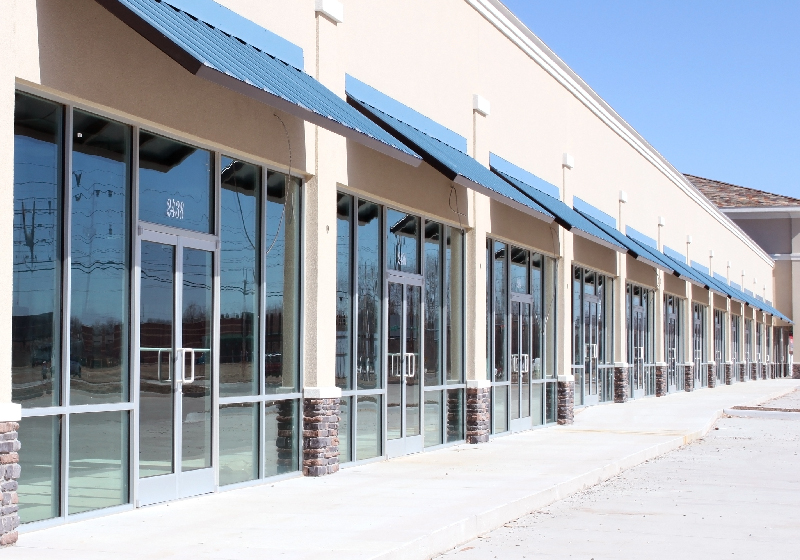
From coast to coast, the latest shopping fixation might come as a surprise. That’s right, strip malls are here to stay! As the economy has had its fair share of speed bumps (and continued hardships are projected to be on their way), strip malls have been a consistent performer in the world of commercial real estate. Of particular note, their performance has been impressive regardless of geographic region. So long as there is a populace residential area in the vicinity, strip malls have become a reliable staple trusted to meet the basic supply needs of consumers. VersatilityThe draw of strip malls in commercial real estate has always been their versatility (and some people have even made it their personal moniker). With these adaptable properties, larger locations can be renovated to fit the needs of multiple tenants that do not require much space. As the market changes, the inherent modularity of these locations affords property owners the room to adjust to market trends. A careful selection of tenants is key when looking to manage a successful strip mall location. The location and clientele should always drive the decisions when selecting quality core tenants, of course. However, as a quick tip, incorporating

Read More »

Making Your Commercial Space Environmentally Friendly

To commemorate World Environment Day, your team here at National Property Inspections, Inc. wanted to fill you in on interesting ways to make your commercial property more energy efficient. Creating a space that is environmentally friendly is an easy way to boost curb appeal and increase buyer awareness–all while improving the planet for generations to come. The best part is that there is a huge return on investment when it comes to creating more energy-efficient properties. Energy Efficiency The best way to preserve energy resources is by investing in solar panel energy. Solar panels not only cut traditional energy costs in half, but they aid our environment by creating a form of energy not dependent on fossil fuels or other fuel sources known to cause environmental pollutants. On average, solar panels cost about $25,000. While installing solar panels appears to come at an expensive price on the surface, it should be noted that there are several government-sponsored programs to help compensate for the price of solar panels. One form of government aid used in support of environmental stability is federal income tax credits. By using federal income tax credits, it is possible to receive 30 percent of the total system

Read More »

Terms & Conditions: Things You’ll Want to Include in Your Commercial Leasing Agreement

As a commercial property tenant, there’s a lot to remember going into a new leasing agreement. While the process can be long and at times tedious, it’s important to understand everything within the agreement to ensure there are no gray areas that could cause issues further down the line. The last thing you’ll want to encounter are disagreements leading to lawsuits based on who is responsible for what. Therefore, it’s necessary to clearly outline all areas of the leasing agreement. Today, we’ll highlight the topics of repairs and maintenance, rent due dates and additional fees, and policies regarding breaking the lease, as these are the most important parts of the lease agreement. Repairs & Maintenance In your commercial lease agreement, one of the most important items to clearly define are the expectations for repairs and maintenance of the property. The owner of the commercial property should inform on a preferred method of contact for repair requests and for emergent needs of the property. Furthermore, it should be outlined as to what kind of repairs are considered emergent opposed to ones that can wait until the next business day. The lease should also state what kind of repairs fall under normal

Read More »

Grocery-Anchored Retail Spaces Prove They’re Still Super Markets

During the early days of the pandemic, experts anticipated that the slow death of brick-and-mortar retail would only speed up during lockdown. In some cases, they were correct, but other retail models proved resilient in unexpected ways—one of these being grocery-anchored retail. Even during a global pandemic, people have to eat. With many restaurants closed and prices spiking, consumers turned to cooking more at home, putting grocery stores center stage. As the years have progressed and other issues like surging inflation and commercial rent have put increasing pressure on businesses, real estate investors are looking for sure bets to weather the times. Grocery-anchored retail seems to fit the bill, as JLL reports $13.3 billion in sales in this sector, with grocery shopping center transactions increasing 56 percent in the first quarter of 2022. What investors recognize in grocery-anchored strip malls is the continuing power of foot traffic. Strong grocery chains like Kroger or Albertsons will continue to reliably draw customers to shop, and these customers often visit consistently and frequently. Other businesses that position themselves to capitalize on people visiting grocery stores, sometimes several times a week, can stand to benefit more from that enhanced visibility than standalone locations. Grocery

Read More »

What is ESG? (And Why Does It Matter?)

Commercial Real Estate is a varied field where people of many different backgrounds converge. New ideas and strategies are actively traded as everyone is looking for the best way to get a strong return on investment. While looking to accomplish these lofty goals, you may have run into an unfamiliar term: ESG. Many CRE investors have prioritized ESG while developing their portfolio and are starting conversations on blogs and on podcasts citing its importance. To get you caught up to speed, here is an overview of ESG, why it has become a topic of discussion, and how it might change how you operate within CRE. What is ESG?To keep it short: ESG is an acronym that stands for Environment, Social, and Governance. It is a type of unstandardized philosophy by which commercial real estate investors (and investors, in general) filter their investment pursuits, with special care for these three “pillars.” One might also consider it a moral standard that an investor chooses to adhere to. The term “ESG” was first referenced in 2004, through the United Nations’ “Who Cares Wins” report. Here, the term is used much as it is used today, as a recommendation on how to build sustainable

Read More »

How to Use Public Art to Increase Your Curb Appeal

Art is subjective. Some people love country music, while others can’t stand it. Some people love abstract paintings, and others prefer realistic landscapes or portraits. Preferences and opinions on art can be incredibly diverse, but almost universally, art has a unique power to inspire people. In a national survey conducted by the Americans for the Arts council, 90% of respondents said that they believed arts institutions are important to a community’s quality of life, and 86% said that they are important to a community’s businesses and economy. Property investors know this well, but strategizing how to best incorporate art into commercial properties can be difficult. In order to increase your curb appeal, here are a few considerations when investing in public art. Community Connection Incorporating art into your commercial property can be transformative, but it is important to act strategically. Consider the local culture and character of the community selecting artists and content. Any public art associated with your property will create a touchstone for that property, and for your tenants. In competitive markets, this can be the differentiator needed to secure high quality tenants and reduce vacancies. When considering the type of art that you want to invest in,

Read More »

What to Know About Office-to-Residential Conversions

Low performing, older office buildings are falling out of favor as work-from-home opportunities expand. In 2020, the coronavirus pandemic forced business owners to change how they looked at managing their employees. To keep running, everyone had to learn how to operate remotely, and two years (and counting) later, it seems as though the workplace may never return to “normal.” Many workers have become accustomed to their newfound flexibility and freedom, and to remain competitive, companies are offering more diverse workplace opportunities. As the world adjusts to new standards, property owners have to adjust as well. Addressing the growing issue of their empty offices has been a difficult task. One potential answer to office owners’ woes has been residential conversions, but how feasible is this option? When do the finances make sense? And what types of buildings are ideal candidates? Here, we look to provide some clarity on this post-pandemic trend. Setting the TableWhile office space investments have been struggling, one form of commercial real estate that has been consistently performing are multi-family properties. Converting a property from a riskier class to something more stable is enticing, but not every case makes sense for this sort of investment. For the past

Read More »

7 Commercial Real Estate Podcasts That Are Worth Your Time

We’re living in the information age. For any given topic, there might be a half dozen articles, a documentary, and a Netflix original series in development to be found. It can be difficult to sift through the content to find what is worthwhile. For entertainment and for news, podcasts have become a great way to learn while multitasking, and for real estate investors, there’s a wealth of professionals in CRE that have dipped their toes into the medium. Whether your tastes are geared towards short and focused content, or towards more casual, entertaining overviews, here are a few Commercial Real Estate podcasts that are worth your time: 1. America’s Commercial Real Estate ShowHosted by Michael Bull, this podcast is the gold standard when it comes to CRE podcasts. Focused on Commercial Real Estate news, Bull has the goal of being informative while analyzing overall trends in the industry. This podcast uses industry specific language that may cause some confusion to inexperienced listeners, but the overall product is extremely digestible. Great for hobbyists and professionals, Michael Bull is clearly confident in what he knows, and his interests make him a natural in the podcast format. “America’s Commercial Real Estate Show” is

Read More »

4 Ways to Win the Office Leasing Game with Amenities

The world has changed quickly in a few short years, and although the newfound flexibility in work spaces has been a boon to workers, office property owners have doubtlessly noticed a difference. Now, lessors not only have to compete with other office spaces, but they also have to compete with workers’ own homes. According to a Pew research poll, 61 percent of work-from-home employees work at home by choice, rather than due to work space closure. Amenities have always been a major consideration when standing out from the crowd, and in the current CRE landscape, they are more important than ever. But what does the modern worker actually want? What really moves the needle when it comes to securing that dream tenant? Today, we cover the amenities that make a difference in filling your empty office spaces. 1. Social SpaceAn inherent advantage in office properties is that they provide direct access to fellow co-workers. In that same Pew poll, although 64 percent of teleworkers reported that they found it easier to balance work and personal life, 60 percent felt that they were less connected to co-workers. Take advantage of this discrepancy by diversifying shared spaces. Aside from conference spaces and

Read More »

Why Strip Malls are Succeeding after COVID

From coast to coast, the latest shopping fixation might come as a surprise. That’s right, strip malls are here to stay! As the economy has had its fair share of speed bumps (and continued hardships are projected to be on their way), strip malls have been a consistent performer in the world of commercial real estate. Of particular note, their performance has been impressive regardless of geographic region. So long as there is a populace residential area in the vicinity, strip malls have become a reliable staple trusted to meet the basic supply needs of consumers. VersatilityThe draw of strip malls in commercial real estate has always been their versatility (and some people have even made it their personal moniker). With these adaptable properties, larger locations can be renovated to fit the needs of multiple tenants that do not require much space. As the market changes, the inherent modularity of these locations affords property owners the room to adjust to market trends. A careful selection of tenants is key when looking to manage a successful strip mall location. The location and clientele should always drive the decisions when selecting quality core tenants, of course. However, as a quick tip, incorporating

Read More »

Making Your Commercial Space Environmentally Friendly

To commemorate World Environment Day, your team here at National Property Inspections, Inc. wanted to fill you in on interesting ways to make your commercial property more energy efficient. Creating a space that is environmentally friendly is an easy way to boost curb appeal and increase buyer awareness–all while improving the planet for generations to come. The best part is that there is a huge return on investment when it comes to creating more energy-efficient properties. Energy Efficiency The best way to preserve energy resources is by investing in solar panel energy. Solar panels not only cut traditional energy costs in half, but they aid our environment by creating a form of energy not dependent on fossil fuels or other fuel sources known to cause environmental pollutants. On average, solar panels cost about $25,000. While installing solar panels appears to come at an expensive price on the surface, it should be noted that there are several government-sponsored programs to help compensate for the price of solar panels. One form of government aid used in support of environmental stability is federal income tax credits. By using federal income tax credits, it is possible to receive 30 percent of the total system

Read More »

Terms & Conditions: Things You’ll Want to Include in Your Commercial Leasing Agreement

As a commercial property tenant, there’s a lot to remember going into a new leasing agreement. While the process can be long and at times tedious, it’s important to understand everything within the agreement to ensure there are no gray areas that could cause issues further down the line. The last thing you’ll want to encounter are disagreements leading to lawsuits based on who is responsible for what. Therefore, it’s necessary to clearly outline all areas of the leasing agreement. Today, we’ll highlight the topics of repairs and maintenance, rent due dates and additional fees, and policies regarding breaking the lease, as these are the most important parts of the lease agreement. Repairs & Maintenance In your commercial lease agreement, one of the most important items to clearly define are the expectations for repairs and maintenance of the property. The owner of the commercial property should inform on a preferred method of contact for repair requests and for emergent needs of the property. Furthermore, it should be outlined as to what kind of repairs are considered emergent opposed to ones that can wait until the next business day. The lease should also state what kind of repairs fall under normal

Read More »

Grocery-Anchored Retail Spaces Prove They’re Still Super Markets

During the early days of the pandemic, experts anticipated that the slow death of brick-and-mortar retail would only speed up during lockdown. In some cases, they were correct, but other retail models proved resilient in unexpected ways—one of these being grocery-anchored retail. Even during a global pandemic, people have to eat. With many restaurants closed and prices spiking, consumers turned to cooking more at home, putting grocery stores center stage. As the years have progressed and other issues like surging inflation and commercial rent have put increasing pressure on businesses, real estate investors are looking for sure bets to weather the times. Grocery-anchored retail seems to fit the bill, as JLL reports $13.3 billion in sales in this sector, with grocery shopping center transactions increasing 56 percent in the first quarter of 2022. What investors recognize in grocery-anchored strip malls is the continuing power of foot traffic. Strong grocery chains like Kroger or Albertsons will continue to reliably draw customers to shop, and these customers often visit consistently and frequently. Other businesses that position themselves to capitalize on people visiting grocery stores, sometimes several times a week, can stand to benefit more from that enhanced visibility than standalone locations. Grocery

Read More »