
Preparing Your Building for RTO
To get ready for RTO mandates, here are a few maintenance tasks and upgrades to implement today.

To get ready for RTO mandates, here are a few maintenance tasks and upgrades to implement today.

Walgreens made news this year when it announced its plans to close 1,200 locations over the next three years (per CNN), an exclamation point on the ongoing struggles of the retail drugstore industry…This begs the question: is the modern drugstore still relevant?
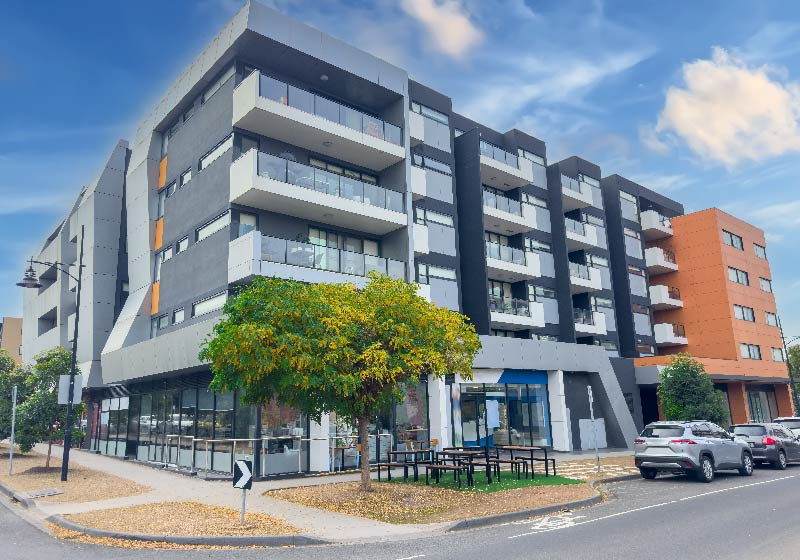
You may not have noticed, but this is actually an election year. That’s right! Currently, the two major parties are jockeying for political seats all across the United States at the local, state, and federal levels. All jokes aside, especially in our polarized political climate, it can often feel like the presence of an election year touches every industry and every aspect of our daily lives. For those who work in the real estate industry or anything tangential to commercial real estate, you’re certainly aware of the ominous reputation associated with election years. According to prevailing belief, election years wreak havoc on investments–projects can stall as uncertainty muddies the waters until the market finally comes up for air post-election. Though this is the prominent impression, do election years truly have such an outsize impact? Or is this another myth causing hesitation from quality opportunities? Let’s take a look! Political Factors that Impact CRECommercial real estate is, of course, influenced by many policies from the local level all the way to the white house. From tax codes to zoning laws, policies can fluctuate from administration to administration, which certainly affects investment plans. Additionally, one candidate may focus on a particular issue
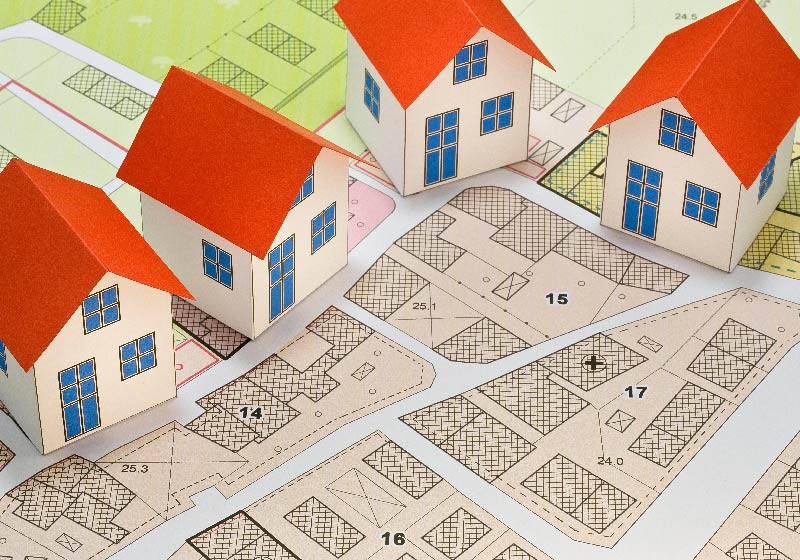
Access to affordable housing has been an ongoing issue all across North America, and communities everywhere have been searching for their own solutions. In New York City, an attempt to address this problem has led to widespread debate and plenty of tension. That attempt? New zoning laws. To be a bit more specific, New York City has a regulation known as the Floor-Area-Ratio cap (or “FAR” cap) which restricts the maximum height of new residential construction within certain areas of the city, like the historic Hell’s Kitchen. We’ve previously discussed how developers have started to convert empty office buildings into apartments in order to add housing opportunities but NYC’s FAR cap might be limiting creative solutions like this. Spectators to this discussion may find themselves wondering if these zoning laws are such a hindrance, why were they put in place originally? And if some zoning laws are only a thorn in the sides of developers, investors, and the average renter, how have they lasted this long? Let’s discuss! What are Zoning Laws?Broadening the discussion for just a second, let’s dive into a few definitions and some background information on zoning laws. To simplify, zoning laws are the rules and restrictions

On June 6, 2024, White House National Climate Advisor Ali Zaidi announced the new definition for “zero-energy buildings” at the American Institute of Architects conference. Although this announcement doesn’t carry new regulations for commercial or residential construction, it does outline a target for new buildings and may reveal which features we can expect to become the new standards in the cities of the future. To get a sneak peek on the impact of this announcement, let’s take a look at what zero-energy buildings are, and how they differ from what we see today. What is a Zero-Energy Building?Zero-energy buildings are, to put it simply, buildings that produce more or an equal amount of energy than they consume throughout the course of the year. According to the Department of Energy, residential and commercial buildings account for 74% of electricity usage in the U.S. With a generation increasingly concerned about their impact on the environment, organizations are committed to fast-tracking solutions for lowering usage and its impact. In the past, the road to true zero-energy was regarded as difficult and expensive, but the Department of Energy (DOE) and the Environmental Protection Agency (EPA) believe that it will become more practical due to

It seems the rumors of the modern shopping mall’s demise have been greatly exaggerated. For years, the rise of convenient e-commerce alternatives cast a shadow over the once-bustling indoor mall. Vacancies increased, and foot traffic steadily declined. The pandemic further fueled the narrative of the shopping mall’s inevitable death, a stark contrast to its heyday as the North American public square in the 80s and 90s. However, a recent study by Placer.ai, an analytics company specializing in commercial real estate data, paints a brighter picture. They compared indoor mall, open-air shopping center, and outlet mall visits in 2024 to pre-pandemic (2019) levels. The results show shoppers are returning, with open-air centers exceeding 2019 numbers for the first time in Q1 of 2024. Indoor malls and outlet malls are lagging behind, but indoor malls have rebounded significantly, going from nearly 30% less traffic in Q1 2021 to only 5% below 2019 numbers in Q1 2024. While many malls are thriving in 2024, the growth isn’t universal. Let’s explore the factors contributing to success in this evolving market. A Smaller, More Streamlined InventoryIt’s important to note that not all malls are experiencing the recovery. Industry analysts suggest there are still too many
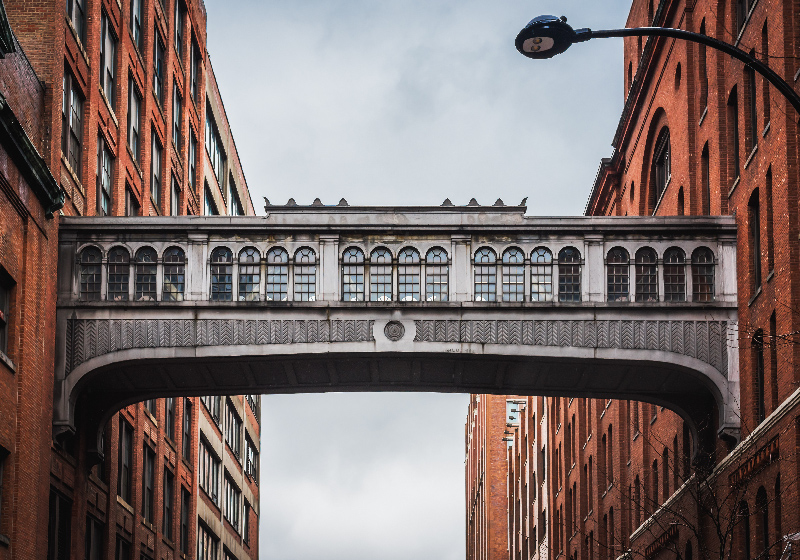
Over the past hundred years or so, human life has changed radically. From the farms to the city, from simple dugout homes in the prairies to towering high-rise skyscrapers in bustling downtowns, there are many aspects of the modern world that would leave the architects and engineers of yesteryear amazed. Still, that hasn’t stopped many from imagining what our future cities might look like, not to mention guessing at how we might solve the problems we face today. According to the President and Designated Expert of the Council on Tall Buildings and Urban Habitat (CTBUH), one feature that may grow in prominence within cities around the world is the skybridge. In the CTBUH Journal, Wood writes: “For more than a century, architects and urban visionaries have foretold of three-dimensional cities, with tall buildings linked by skybridges forming a new kind of urban fabric. Rapid urbanization and new technological advances have converged to reignite the potential of such constructions at the urban scale.” Antony Wood’s 2020 comments carried an excited vision for skybridges moving into the future, but have these predictions become a reality, or are we still waiting to see their full potential? What is a Skybridge?For the uninitiated, skybridges

Artificial intelligence (AI) has been a hot-button topic of discussion, in not only educational settings, but the workplace. Business owners and investors want to stay ahead of the curve, and employees fear becoming redundant, but to make a long story short, no one knows fully what to expect with AI. For those who are using AI in their businesses already, early tools are being lauded as time-savers, improving productivity in many different areas and limiting time spent on mundane tasks. According to Forbes, the AI market size is on track to reach $407 billion by 2027 (from $86.9 billion in 2022), which means that all industries are going to have to learn to adapt. With a new industry that’s growing so quickly, AI is going to demand its own space to expand physically. To answer this growing demand, here’s how the CRE space will answer. Answering AI’s Growing Space DemandArtificial intelligence tools need developers and specialists working in those fields, which makes tech centers particularly reactive to industry growth. Areas like the San Francisco Bay area, Boston, Seattle, and New York will need to provide adequate working options for tech employees. In the past, this meant that investors could expect

Since international lockdowns during the pandemic caused millions to delay or cancel vacation plans, people have flocked to airports. A trend known colloquially as “revenge travel” has resulted in a surge of people reconnecting with family and friends, seeking out adventure, and pursuing “payback” for lost opportunities. This fad has proven to be a boon to the recovering post-pandemic hospitality and travel industries, but as time goes on, many are beginning to wonder if the benefits of revenge travel may be coming to an end. So, let’s look at the facts and factors at play. Is 2024 the year we finally say goodbye to revenge travel, or is there evidence to suggest a new normal in travel and hospitality? Factors Putting Revenge Travel to BedWhile the term “revenge travel” was born on social media, the impact felt by hotels and airlines everywhere has been very real and tangible. According to a recent Deloitte study, the percentage of Americans who planned to stay in paid lodging during summer travels increased for the third straight year, and the average number of trips increased in 2023: from 2.3 trips in 2022 to 3.1 in 2023. The steady climb of vacationing since 2021 may

From time to time a trend pops up in commercial real estate that’s interesting or strange enough to get a conversation going. Throughout the pandemic, when businesses were struggling everywhere, the trend that captured the imagination of entrepreneurs in the midst of a chaotic restaurant industry was “ghost kitchens” (we wrote about it, too!). While restaurants, retail stores, and other businesses tried to adapt to new expectations from their customers, the freedom and flexibility from ghost kitchens made some believe that they would make up 20% of the restaurant industry by 2025 (per CNN). After such lofty predictions, it may be a shock to see businesses like Kitchen United, Butler Hospitality, and CloudKitchens pulling back in a big way after their own considerable investments in the ghost kitchen concept. So, what happened? And what can we learn from this trend’s near meteoric rise and sudden fall? What are Ghost Kitchens?To recap, ghost kitchens (also known as cloud kitchens, virtual kitchens, and dark kitchens) are businesses that offer a delivery-only menu, with no available dine-in options for their customers and no unique signage on their location for identification. Because of this (although these businesses existed before the pandemic), ghost kitchens rose
To get ready for RTO mandates, here are a few maintenance tasks and upgrades to implement today.
Walgreens made news this year when it announced its plans to close 1,200 locations over the next three years (per CNN), an exclamation point on the ongoing struggles of the retail drugstore industry…This begs the question: is the modern drugstore still relevant?
You may not have noticed, but this is actually an election year. That’s right! Currently, the two major parties are jockeying for political seats all across the United States at the local, state, and federal levels. All jokes aside, especially in our polarized political climate, it can often feel like the presence of an election year touches every industry and every aspect of our daily lives. For those who work in the real estate industry or anything tangential to commercial real estate, you’re certainly aware of the ominous reputation associated with election years. According to prevailing belief, election years wreak havoc on investments–projects can stall as uncertainty muddies the waters until the market finally comes up for air post-election. Though this is the prominent impression, do election years truly have such an outsize impact? Or is this another myth causing hesitation from quality opportunities? Let’s take a look! Political Factors that Impact CRECommercial real estate is, of course, influenced by many policies from the local level all the way to the white house. From tax codes to zoning laws, policies can fluctuate from administration to administration, which certainly affects investment plans. Additionally, one candidate may focus on a particular issue
Access to affordable housing has been an ongoing issue all across North America, and communities everywhere have been searching for their own solutions. In New York City, an attempt to address this problem has led to widespread debate and plenty of tension. That attempt? New zoning laws. To be a bit more specific, New York City has a regulation known as the Floor-Area-Ratio cap (or “FAR” cap) which restricts the maximum height of new residential construction within certain areas of the city, like the historic Hell’s Kitchen. We’ve previously discussed how developers have started to convert empty office buildings into apartments in order to add housing opportunities but NYC’s FAR cap might be limiting creative solutions like this. Spectators to this discussion may find themselves wondering if these zoning laws are such a hindrance, why were they put in place originally? And if some zoning laws are only a thorn in the sides of developers, investors, and the average renter, how have they lasted this long? Let’s discuss! What are Zoning Laws?Broadening the discussion for just a second, let’s dive into a few definitions and some background information on zoning laws. To simplify, zoning laws are the rules and restrictions
On June 6, 2024, White House National Climate Advisor Ali Zaidi announced the new definition for “zero-energy buildings” at the American Institute of Architects conference. Although this announcement doesn’t carry new regulations for commercial or residential construction, it does outline a target for new buildings and may reveal which features we can expect to become the new standards in the cities of the future. To get a sneak peek on the impact of this announcement, let’s take a look at what zero-energy buildings are, and how they differ from what we see today. What is a Zero-Energy Building?Zero-energy buildings are, to put it simply, buildings that produce more or an equal amount of energy than they consume throughout the course of the year. According to the Department of Energy, residential and commercial buildings account for 74% of electricity usage in the U.S. With a generation increasingly concerned about their impact on the environment, organizations are committed to fast-tracking solutions for lowering usage and its impact. In the past, the road to true zero-energy was regarded as difficult and expensive, but the Department of Energy (DOE) and the Environmental Protection Agency (EPA) believe that it will become more practical due to
It seems the rumors of the modern shopping mall’s demise have been greatly exaggerated. For years, the rise of convenient e-commerce alternatives cast a shadow over the once-bustling indoor mall. Vacancies increased, and foot traffic steadily declined. The pandemic further fueled the narrative of the shopping mall’s inevitable death, a stark contrast to its heyday as the North American public square in the 80s and 90s. However, a recent study by Placer.ai, an analytics company specializing in commercial real estate data, paints a brighter picture. They compared indoor mall, open-air shopping center, and outlet mall visits in 2024 to pre-pandemic (2019) levels. The results show shoppers are returning, with open-air centers exceeding 2019 numbers for the first time in Q1 of 2024. Indoor malls and outlet malls are lagging behind, but indoor malls have rebounded significantly, going from nearly 30% less traffic in Q1 2021 to only 5% below 2019 numbers in Q1 2024. While many malls are thriving in 2024, the growth isn’t universal. Let’s explore the factors contributing to success in this evolving market. A Smaller, More Streamlined InventoryIt’s important to note that not all malls are experiencing the recovery. Industry analysts suggest there are still too many
Over the past hundred years or so, human life has changed radically. From the farms to the city, from simple dugout homes in the prairies to towering high-rise skyscrapers in bustling downtowns, there are many aspects of the modern world that would leave the architects and engineers of yesteryear amazed. Still, that hasn’t stopped many from imagining what our future cities might look like, not to mention guessing at how we might solve the problems we face today. According to the President and Designated Expert of the Council on Tall Buildings and Urban Habitat (CTBUH), one feature that may grow in prominence within cities around the world is the skybridge. In the CTBUH Journal, Wood writes: “For more than a century, architects and urban visionaries have foretold of three-dimensional cities, with tall buildings linked by skybridges forming a new kind of urban fabric. Rapid urbanization and new technological advances have converged to reignite the potential of such constructions at the urban scale.” Antony Wood’s 2020 comments carried an excited vision for skybridges moving into the future, but have these predictions become a reality, or are we still waiting to see their full potential? What is a Skybridge?For the uninitiated, skybridges
Artificial intelligence (AI) has been a hot-button topic of discussion, in not only educational settings, but the workplace. Business owners and investors want to stay ahead of the curve, and employees fear becoming redundant, but to make a long story short, no one knows fully what to expect with AI. For those who are using AI in their businesses already, early tools are being lauded as time-savers, improving productivity in many different areas and limiting time spent on mundane tasks. According to Forbes, the AI market size is on track to reach $407 billion by 2027 (from $86.9 billion in 2022), which means that all industries are going to have to learn to adapt. With a new industry that’s growing so quickly, AI is going to demand its own space to expand physically. To answer this growing demand, here’s how the CRE space will answer. Answering AI’s Growing Space DemandArtificial intelligence tools need developers and specialists working in those fields, which makes tech centers particularly reactive to industry growth. Areas like the San Francisco Bay area, Boston, Seattle, and New York will need to provide adequate working options for tech employees. In the past, this meant that investors could expect
Since international lockdowns during the pandemic caused millions to delay or cancel vacation plans, people have flocked to airports. A trend known colloquially as “revenge travel” has resulted in a surge of people reconnecting with family and friends, seeking out adventure, and pursuing “payback” for lost opportunities. This fad has proven to be a boon to the recovering post-pandemic hospitality and travel industries, but as time goes on, many are beginning to wonder if the benefits of revenge travel may be coming to an end. So, let’s look at the facts and factors at play. Is 2024 the year we finally say goodbye to revenge travel, or is there evidence to suggest a new normal in travel and hospitality? Factors Putting Revenge Travel to BedWhile the term “revenge travel” was born on social media, the impact felt by hotels and airlines everywhere has been very real and tangible. According to a recent Deloitte study, the percentage of Americans who planned to stay in paid lodging during summer travels increased for the third straight year, and the average number of trips increased in 2023: from 2.3 trips in 2022 to 3.1 in 2023. The steady climb of vacationing since 2021 may
From time to time a trend pops up in commercial real estate that’s interesting or strange enough to get a conversation going. Throughout the pandemic, when businesses were struggling everywhere, the trend that captured the imagination of entrepreneurs in the midst of a chaotic restaurant industry was “ghost kitchens” (we wrote about it, too!). While restaurants, retail stores, and other businesses tried to adapt to new expectations from their customers, the freedom and flexibility from ghost kitchens made some believe that they would make up 20% of the restaurant industry by 2025 (per CNN). After such lofty predictions, it may be a shock to see businesses like Kitchen United, Butler Hospitality, and CloudKitchens pulling back in a big way after their own considerable investments in the ghost kitchen concept. So, what happened? And what can we learn from this trend’s near meteoric rise and sudden fall? What are Ghost Kitchens?To recap, ghost kitchens (also known as cloud kitchens, virtual kitchens, and dark kitchens) are businesses that offer a delivery-only menu, with no available dine-in options for their customers and no unique signage on their location for identification. Because of this (although these businesses existed before the pandemic), ghost kitchens rose