Category: Commercial Inspection

Building Satisfied Tenants For Your Commercial Property

It’s no surprise that the secret to success in the commercial real estate industry is through retaining quality tenants. Advertising, maintenance, and upgrade strategies are all centered around finding tenants who are responsive and reliable, then keeping them long term. The costs accrued from advertising and identifying new tenants can be eye-opening, and leaving space vacant for too long means missing out on income. This is all why seasoned commercial property owners and managers know that good commercial tenants don’t grow on trees. Happy tenants are less likely to make a change or look for different options, which is why the most successful property owners and managers prioritize tenant satisfaction. If you’re looking for ways to lower your turnover rate and keep your best tenants, consider incorporating a few of these strategies into your management process. Practice Effective CommunicationResponsiveness is a trait that will lead to success in many different industries, but when it comes to tenant satisfaction, this might be the most important factor to focus on. Tenants largely want their privacy and room to operate their businesses as they see fit, but when they reach out with a concern or complaint, radio silence is a common cause for


Read More »

The Biggest Electrical Red Flags From A Professional Commercial Property Inspector

Attracting and retaining top commercial tenants can be difficult. In competitive markets, managers and property owners need to capitalize any way they can to get their locations to stand out. Often, this can mean redesigning and modernizing interior layouts, investing in particular amenities, or maybe even incorporating public art. While amenities are important, every marketing strategy should start with upkeep. Keeping a commercial building safe and well-maintained is the only way to forge a sterling reputation and instill confidence in key tenants. With this in mind, it’s every good property owner’s job to make sure their electrical systems are secure and safe. Every commercial property needs consistent attention and diligent observation, otherwise small problems could result in drops in energy efficiency, increased costs, or even electrical fires. To take action today, here are the biggest red flags in commercial electrical systems. Older buildings or locations that don’t utilize safe, grounded outlets should look to update their systems as quickly as possible. Commercial property inspectors use voltage testers on power outlets as part of a standard building inspection in order to identify any outdated, damaged, or faulty outlets that might present fire hazards. Wiring can become degraded naturally over time as

Read More »

The Basics of Commercial Plumbing Matinenance

For every commercial property to operate with success, owners need to be serious about consistently checking in on their building’s key systems. Phenomenal property maintenance is paramount if the goal is to keep tenants safe and satisfied. When it comes to monitoring and maintaining plumbing of a commercial property, here are a few things to consider. Small Issues Can GrowOne important thing to remember when it comes to maintaining a larger commercial property that needs its systems to run constantly (or draw the ire of tenants and their customers) is that small maintenance problems left untreated can lead to much larger issues down the road. When looking at a property’s plumbing, that means keeping a hawkish eye out for leaks. Leaks can occur due to many different reasons. Normal wear and tear can result in ineffective rubber gaskets and tree roots can grow directly into underground systems. Major leaks, sometimes referred to as “Silent Leaks,” can even grow without any exterior indication within walls or surrounding a building’s foundation. Many of these leaks can be unpredictable without regular supervision and professional inspection. To get ahead of leaks that can grow into major damages and unplanned system failures, coordinate with property

Read More »

Use Energy Audits to Benefit Your Business

Property and business owners are constantly searching for ways to improve their ROI and cut costs when possible. Despite this, the Environmental Protection Agency (EPA) has found that commercial buildings waste 30% of their energy budget on average. In an industry that sees constant innovations, property owners can look to minimize deterioration and update their primary energy-consuming systems by performing a commercial energy audit with a trained professional. What is a Commercial Energy Audit?A commercial energy audit is a comprehensive inspection performed by a professional energy auditor of a building or campus. While every energy audit is customized to fit the needs of the building, each auditor follows the best standards of practice as outlined by bodies like the American Society of Heating, Refrigerating, and Air-Conditioning Engineers (ASHRAE). In an effort to standardize energy audits, ASHRAE has divided these consultations into three separate levels, with the analysis increasing in detail with each step. Residential energy audits tend to stick to the first level, consisting mostly of a basic walkthrough, while commercial energy audits may be more comprehensive. Regardless of the level of audit, the property owner will receive a detailed report with action items to increase energy efficiency. What is

Read More »

Commercial Thermography Inspections: An Underutilized Cost-Saving Strategy

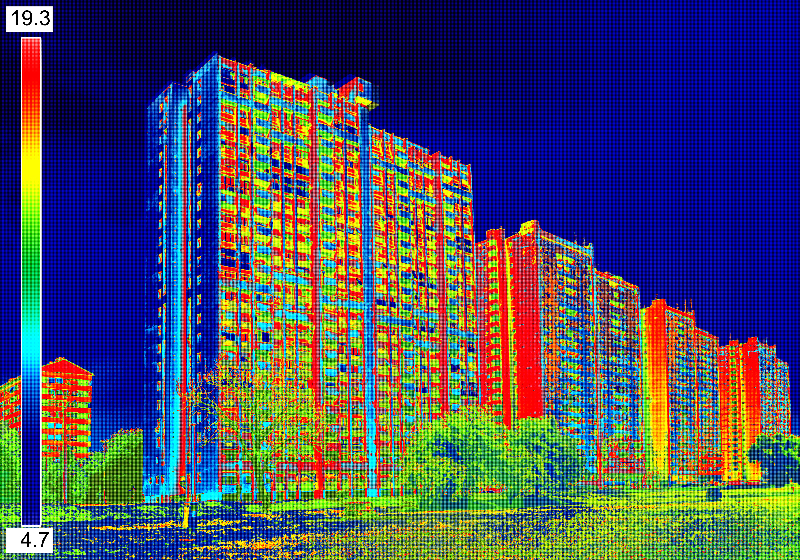
Homeowners know very well how much their energy bills can hurt the wallet throughout the year. For commercial property owners, those energy bills are considerably more punishing. While homeowners can search for ways to cut down on spending, such as adding insulation to their attics, or resealing their windows, commercial property owners too often see energy as a standard cost of operation without much room for adjustment. Of course, with a much larger space to examine, commercial properties can be much more intimidating to survey and that much more difficult to identify areas for improvement. According to Constellation, a leading commercial power supplier in the United States, 40% of the total energy consumption for office buildings comes from heating and cooling alone. Depending on the industry and size of the building, this percentage can be even higher. Commercial property owners are, unfortunately, mostly missing out on these savings that are more accessible for homeowners due to sheer size. To combat this issue, the best answer for property owners is to get a thermographic inspection. What is Thermography? Thermography is a type of scan conducted by property inspectors to find thermal anomalies and air leaks within a building. “Thermographers” use one

Read More »

Save On Taxes With Cost Segregation

In the world of commercial real estate, any opportunity to save money can be retooled back into properties to improve amenities, elevate tenant experience, or even invest in new ventures. Cost segregation is a tax-saving method that is not taken advantage of as often as it should. In partnership with Scarpello Consulting, National Property Inspections is now offering cost segregation services to preferred commercial property clients. Cost segregation can seem like a complex topic to those unfamiliar with the concept, but it is more straightforward than the name might suggest. To discover whether you may qualify for cost segregation, let’s take the time to discuss what it is and how it works. What Is Cost Segregation? Cost segregation is a tax savings tool used to reduce the income tax liabilities of property owners by accelerating depreciation deductions. A cost segregation study is conducted to evaluate a qualifying property and track its components on a shortened scale, usually after 5, 7, or 15 years rather than the traditional 27.5 or 39 year period. This allows owners to write-off components much earlier than usual, saving considerably on property taxes. While there is an initial cost with a cost segregation study, the tax

Read More »

What To Expect During A Hotel Property Inspection

As we are heading into a new year, now may be a good time to start looking forward. New investments could be on the horizon, or perhaps new resolutions to improve on past ventures. In the hospitality industry, a commitment to excellence should always come with a property inspection. Whether through an annual property maintenance inspection or through an insurance underwriting experience, hotel property inspections are the best way to demonstrate responsibility and proactively work for your guests’ best interests. Insurance underwriting inspections don’t need to be a nerve-wracking experience. Just as with any home maintenance or property inspection, underwriting inspections are meant to provide a clearer picture on the condition of a property so that realistic expectations can be outlined. For commercial property owners unfamiliar with the process, however, it may be useful to break down some of the items and processes that go into a standard hotel property inspection. When Hotel Property Inspections Are Common In order to operate a successful and safe hotel business with confidence, a good insurance plan is key. Insurance underwriting inspections are an important step to setting up new coverage, so this should be expected after any new property acquisition, after considerable upgrades

Read More »

Why Draw Inspections Are a Must for Your New Development Project

If you’re new to the world of real estate and commercial property management, you may want to consider adding draw inspections to your business platform. By definition, a draw inspection is an inspection completed to evaluate the current progression of a commercial or residential project against what is being reported as complete by the contractor. These inspections are typically requested by lenders who hope to keep building projects on schedule and would like a third-party, unbiased assessment of how the work is going. Draw inspections have grown in popularity as many engineering firms, architects, and banks nationwide need inspectors to perform this under-utilized service for new and refurbished properties. Draw Inspection Requirements To schedule a draw inspection, you just need to provide your local NPI inspector with a checklist of items to examine while on assignment. After receiving your checklist, your NPI inspector will be required to take pictures of items listed on the inspection list and make notations of what is there versus what is being reported by the construction company or lender. Advantages of Draw Inspections for Different Industries 1. Real Estate AgentsIf you’re a real estate agent, you may not be using draw inspections to your full

Read More »

What It Means to Inspect: Differing Views for Different Industries

In the inspection industry, we work in close relation with those in the insurance industry, property management companies, real estate agents, and of course, property owners. Although these trades may align in some areas, a point where they all differ is in the definition of what it means to have an inspection performed. While you might assume that the definition of a property inspection would bear the same weight across the board, you may be surprised at the fact that it actually doesn’t. For clarification’s sake, we’re going to examine the idea of what inspections mean for different industries and how our scope of work may change depending on the needs of our unique client types. Inspection Basics The definition of what an inspection entails for an inspector is very different from what the average consumer, property management company, or insurance agents would assume. According to the International Association of Certified Home Inspectors (InterNACHI), the definition of inspection is: “To examine readily accessible systems and components safely, using normal operating controls, and accessing readily accessible areas, in accordance with the Standards of Practice.” This basically means that everything that one can see or operate within reason are fair game for

Read More »

Building Satisfied Tenants For Your Commercial Property

It’s no surprise that the secret to success in the commercial real estate industry is through retaining quality tenants. Advertising, maintenance, and upgrade strategies are all centered around finding tenants who are responsive and reliable, then keeping them long term. The costs accrued from advertising and identifying new tenants can be eye-opening, and leaving space vacant for too long means missing out on income. This is all why seasoned commercial property owners and managers know that good commercial tenants don’t grow on trees. Happy tenants are less likely to make a change or look for different options, which is why the most successful property owners and managers prioritize tenant satisfaction. If you’re looking for ways to lower your turnover rate and keep your best tenants, consider incorporating a few of these strategies into your management process. Practice Effective CommunicationResponsiveness is a trait that will lead to success in many different industries, but when it comes to tenant satisfaction, this might be the most important factor to focus on. Tenants largely want their privacy and room to operate their businesses as they see fit, but when they reach out with a concern or complaint, radio silence is a common cause for

Read More »

The Biggest Electrical Red Flags From A Professional Commercial Property Inspector

Attracting and retaining top commercial tenants can be difficult. In competitive markets, managers and property owners need to capitalize any way they can to get their locations to stand out. Often, this can mean redesigning and modernizing interior layouts, investing in particular amenities, or maybe even incorporating public art. While amenities are important, every marketing strategy should start with upkeep. Keeping a commercial building safe and well-maintained is the only way to forge a sterling reputation and instill confidence in key tenants. With this in mind, it’s every good property owner’s job to make sure their electrical systems are secure and safe. Every commercial property needs consistent attention and diligent observation, otherwise small problems could result in drops in energy efficiency, increased costs, or even electrical fires. To take action today, here are the biggest red flags in commercial electrical systems. Older buildings or locations that don’t utilize safe, grounded outlets should look to update their systems as quickly as possible. Commercial property inspectors use voltage testers on power outlets as part of a standard building inspection in order to identify any outdated, damaged, or faulty outlets that might present fire hazards. Wiring can become degraded naturally over time as

Read More »

The Basics of Commercial Plumbing Matinenance

For every commercial property to operate with success, owners need to be serious about consistently checking in on their building’s key systems. Phenomenal property maintenance is paramount if the goal is to keep tenants safe and satisfied. When it comes to monitoring and maintaining plumbing of a commercial property, here are a few things to consider. Small Issues Can GrowOne important thing to remember when it comes to maintaining a larger commercial property that needs its systems to run constantly (or draw the ire of tenants and their customers) is that small maintenance problems left untreated can lead to much larger issues down the road. When looking at a property’s plumbing, that means keeping a hawkish eye out for leaks. Leaks can occur due to many different reasons. Normal wear and tear can result in ineffective rubber gaskets and tree roots can grow directly into underground systems. Major leaks, sometimes referred to as “Silent Leaks,” can even grow without any exterior indication within walls or surrounding a building’s foundation. Many of these leaks can be unpredictable without regular supervision and professional inspection. To get ahead of leaks that can grow into major damages and unplanned system failures, coordinate with property

Read More »

Use Energy Audits to Benefit Your Business

Property and business owners are constantly searching for ways to improve their ROI and cut costs when possible. Despite this, the Environmental Protection Agency (EPA) has found that commercial buildings waste 30% of their energy budget on average. In an industry that sees constant innovations, property owners can look to minimize deterioration and update their primary energy-consuming systems by performing a commercial energy audit with a trained professional. What is a Commercial Energy Audit?A commercial energy audit is a comprehensive inspection performed by a professional energy auditor of a building or campus. While every energy audit is customized to fit the needs of the building, each auditor follows the best standards of practice as outlined by bodies like the American Society of Heating, Refrigerating, and Air-Conditioning Engineers (ASHRAE). In an effort to standardize energy audits, ASHRAE has divided these consultations into three separate levels, with the analysis increasing in detail with each step. Residential energy audits tend to stick to the first level, consisting mostly of a basic walkthrough, while commercial energy audits may be more comprehensive. Regardless of the level of audit, the property owner will receive a detailed report with action items to increase energy efficiency. What is

Read More »

Commercial Thermography Inspections: An Underutilized Cost-Saving Strategy

Homeowners know very well how much their energy bills can hurt the wallet throughout the year. For commercial property owners, those energy bills are considerably more punishing. While homeowners can search for ways to cut down on spending, such as adding insulation to their attics, or resealing their windows, commercial property owners too often see energy as a standard cost of operation without much room for adjustment. Of course, with a much larger space to examine, commercial properties can be much more intimidating to survey and that much more difficult to identify areas for improvement. According to Constellation, a leading commercial power supplier in the United States, 40% of the total energy consumption for office buildings comes from heating and cooling alone. Depending on the industry and size of the building, this percentage can be even higher. Commercial property owners are, unfortunately, mostly missing out on these savings that are more accessible for homeowners due to sheer size. To combat this issue, the best answer for property owners is to get a thermographic inspection. What is Thermography? Thermography is a type of scan conducted by property inspectors to find thermal anomalies and air leaks within a building. “Thermographers” use one

Read More »

Save On Taxes With Cost Segregation

In the world of commercial real estate, any opportunity to save money can be retooled back into properties to improve amenities, elevate tenant experience, or even invest in new ventures. Cost segregation is a tax-saving method that is not taken advantage of as often as it should. In partnership with Scarpello Consulting, National Property Inspections is now offering cost segregation services to preferred commercial property clients. Cost segregation can seem like a complex topic to those unfamiliar with the concept, but it is more straightforward than the name might suggest. To discover whether you may qualify for cost segregation, let’s take the time to discuss what it is and how it works. What Is Cost Segregation? Cost segregation is a tax savings tool used to reduce the income tax liabilities of property owners by accelerating depreciation deductions. A cost segregation study is conducted to evaluate a qualifying property and track its components on a shortened scale, usually after 5, 7, or 15 years rather than the traditional 27.5 or 39 year period. This allows owners to write-off components much earlier than usual, saving considerably on property taxes. While there is an initial cost with a cost segregation study, the tax

Read More »

What To Expect During A Hotel Property Inspection

As we are heading into a new year, now may be a good time to start looking forward. New investments could be on the horizon, or perhaps new resolutions to improve on past ventures. In the hospitality industry, a commitment to excellence should always come with a property inspection. Whether through an annual property maintenance inspection or through an insurance underwriting experience, hotel property inspections are the best way to demonstrate responsibility and proactively work for your guests’ best interests. Insurance underwriting inspections don’t need to be a nerve-wracking experience. Just as with any home maintenance or property inspection, underwriting inspections are meant to provide a clearer picture on the condition of a property so that realistic expectations can be outlined. For commercial property owners unfamiliar with the process, however, it may be useful to break down some of the items and processes that go into a standard hotel property inspection. When Hotel Property Inspections Are Common In order to operate a successful and safe hotel business with confidence, a good insurance plan is key. Insurance underwriting inspections are an important step to setting up new coverage, so this should be expected after any new property acquisition, after considerable upgrades

Read More »

Why Draw Inspections Are a Must for Your New Development Project

If you’re new to the world of real estate and commercial property management, you may want to consider adding draw inspections to your business platform. By definition, a draw inspection is an inspection completed to evaluate the current progression of a commercial or residential project against what is being reported as complete by the contractor. These inspections are typically requested by lenders who hope to keep building projects on schedule and would like a third-party, unbiased assessment of how the work is going. Draw inspections have grown in popularity as many engineering firms, architects, and banks nationwide need inspectors to perform this under-utilized service for new and refurbished properties. Draw Inspection Requirements To schedule a draw inspection, you just need to provide your local NPI inspector with a checklist of items to examine while on assignment. After receiving your checklist, your NPI inspector will be required to take pictures of items listed on the inspection list and make notations of what is there versus what is being reported by the construction company or lender. Advantages of Draw Inspections for Different Industries 1. Real Estate AgentsIf you’re a real estate agent, you may not be using draw inspections to your full

Read More »

What It Means to Inspect: Differing Views for Different Industries

In the inspection industry, we work in close relation with those in the insurance industry, property management companies, real estate agents, and of course, property owners. Although these trades may align in some areas, a point where they all differ is in the definition of what it means to have an inspection performed. While you might assume that the definition of a property inspection would bear the same weight across the board, you may be surprised at the fact that it actually doesn’t. For clarification’s sake, we’re going to examine the idea of what inspections mean for different industries and how our scope of work may change depending on the needs of our unique client types. Inspection Basics The definition of what an inspection entails for an inspector is very different from what the average consumer, property management company, or insurance agents would assume. According to the International Association of Certified Home Inspectors (InterNACHI), the definition of inspection is: “To examine readily accessible systems and components safely, using normal operating controls, and accessing readily accessible areas, in accordance with the Standards of Practice.” This basically means that everything that one can see or operate within reason are fair game for

Read More »