Industrial commercial real estate has had to deal with a host of challenges as it tries to keep up with e-commerce. In 2020, digital purchases saw a 44% increase with more people staying home and buying online due to COVID-19. Every type of business from clothing retailers to grocery stores had to adapt their supply process to meet the demand. To try and store enough inventory and get orders out quickly to customers, some companies are turning their eyes to the sky.
Build Up, Not Out
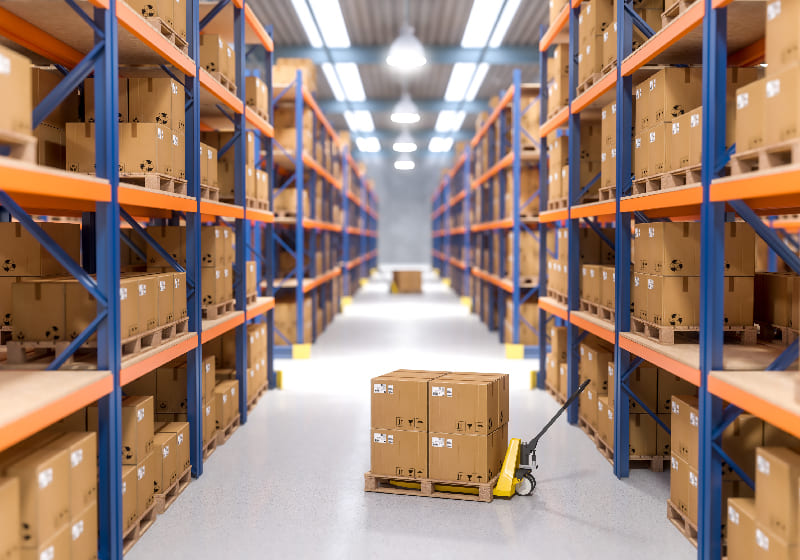
Multi-story distribution centers are “on the rise” so to speak throughout the North American market. This new take aims to resolve the major issues facing industrial sites, especially those in crowded cities and suburbs. What developers have found is that stacking one warehouse on top of the other opens up more opportunities for growth. Fulfillment centers like these have gained popularity in major Asian cities near seaports. Their close proximity to the loading docks shortens the time between drop-off, pick-up, and delivery to the customer.
Matching Pace with Online Sales
Consumers today want things as soon as possible, with data showing nearly 90% willing to pay for same-day delivery. As e-commerce continues to grow, distributors need to find a way to keep enough stock on hand and get items out instantly. Especially as online grocery shopping has become more popular, efficiency is a key concern. Rather than having multiple fulfilment centers spaced around an area that may be miles away, keeping everything in one place makes routing trucks easier. It also makes tracking sales and filling orders simpler. Being able to easily re-stock a single facility helps prevent companies from lagging behind in the digital market.
Maximizing Land Usage
As warehouses try to move closer to buyers’ front doors, they might find themselves struggling to fit in. Prime real estate in crowded metros is hard to come by, which means distributors will have to make the most of what they get. Constructing a multi-level center means you’ll be optimizing your land and getting your money’s worth. You don’t have to take the time to search for an additional site that fits in your budget and wait for it to be finished, ultimately slowing you down. This also helps limit your carbon footprint as less land is needed for development.
Configuring Costs
Although there are obvious advantages to multi-story warehouses, there are clear obstacles. Only needing one spot does save you on the upfront land purchase, but you’ll have to dish out more in the construction. Taller warehouses have different code requirements, such as the one-hour fire rating, that need to be accounted for. You’ll need to use more durable materials as well to support the weight of trucks and equipment being on a higher level. It might take some extra financial backing to ensure that your building is up to code and will be safe for workers.
Worker Logistics
Not only do you have to plan how to house everything, you need to figure out how to house everyone. Owning a larger warehouse means you’ll have a higher number of workers and vehicles all together. Personal and delivery vehicles will need their own parking spaces and entrances so that they don’t disrupt each other. Having a limited territory to do this means you could end up shrinking the design of your building. You’ll also need to account for additional break rooms and common spaces, which eats away at your usable square footage.
How Do Multi-Levels Stack Up?
Asia has shown that these taller inventory centers can be viable, but their spread in other areas hasn’t been as quick. The higher construction cost is a major obstacle for many companies and investors as opposed to single-stories. Planning takes a considerable amount of time as well to find a spot that works well logistically and can support a major build. However as on-demand virtual ordering increases, more distributors from San Francisco to New York could experiment with multi-level warehouses.
For all your CRE inspection needs, contact your local NPI inspector and schedule an appointment today.